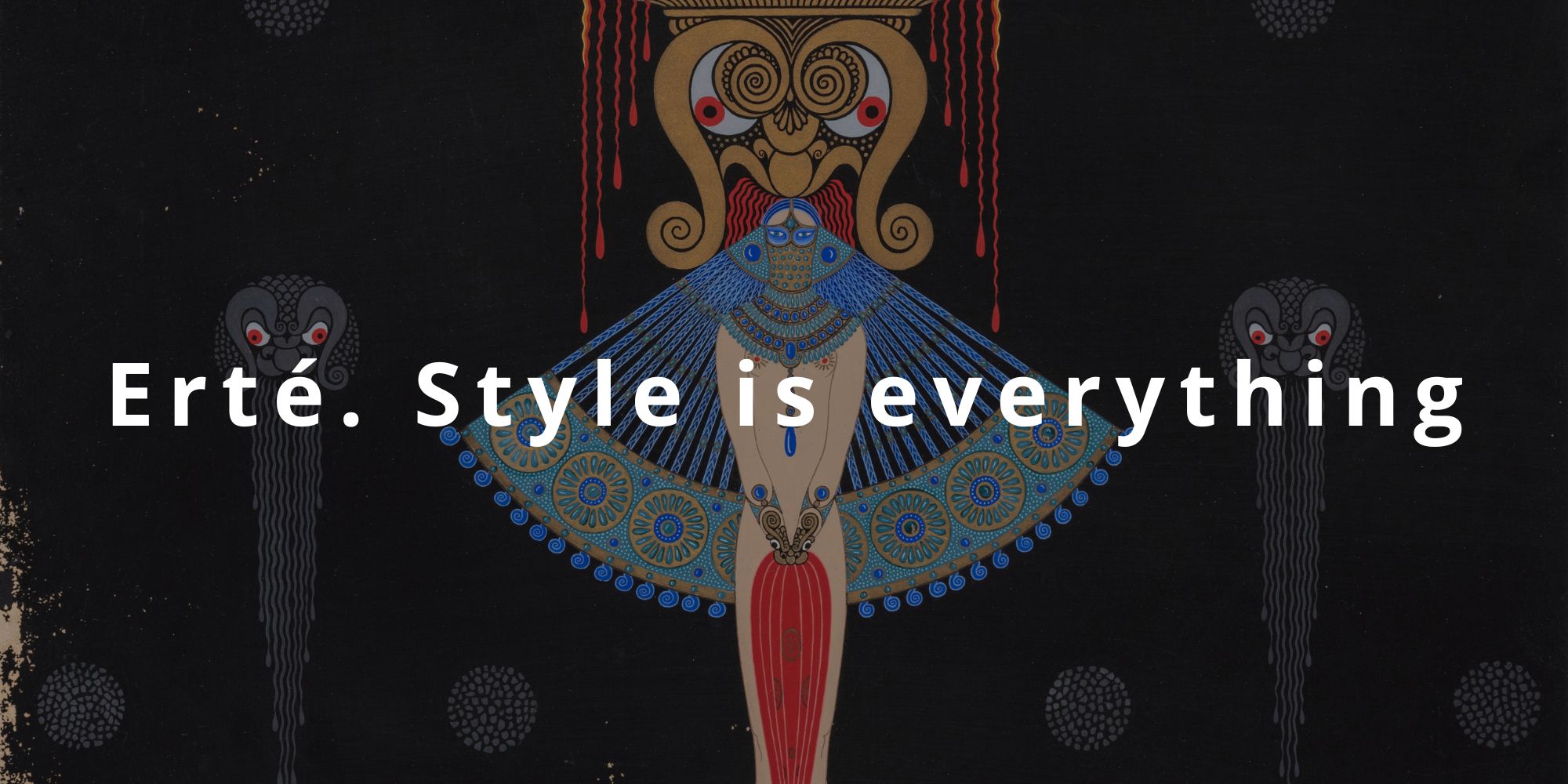
The brilliant vision of Erté is being revealed to the public this spring.
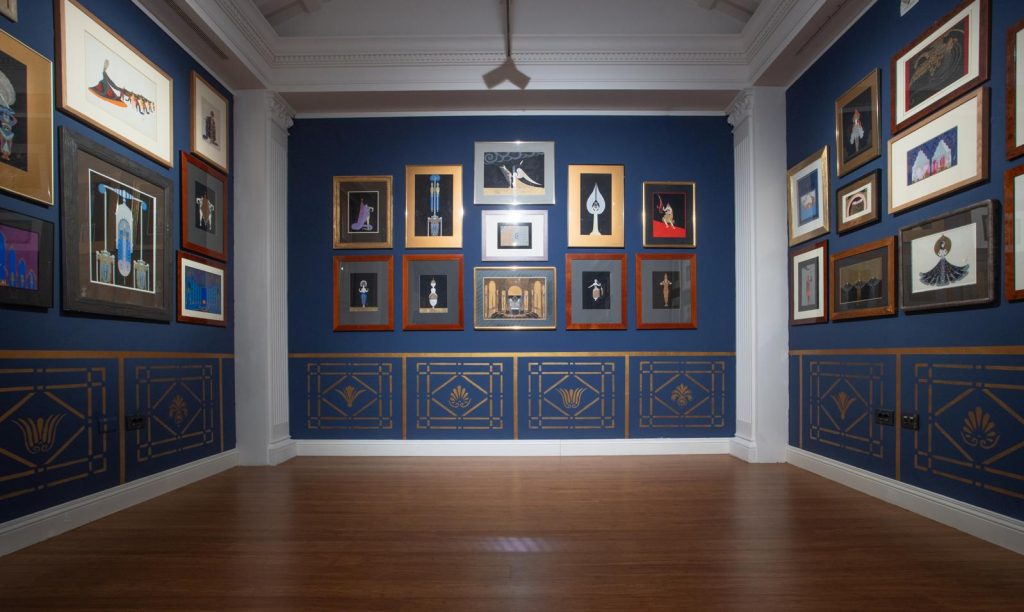
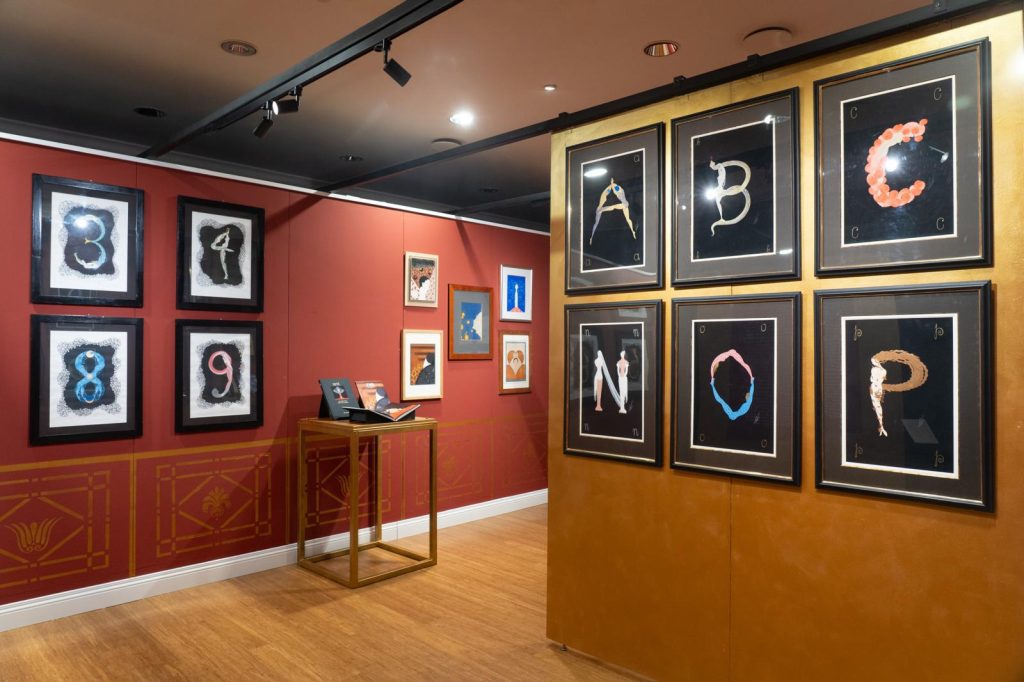
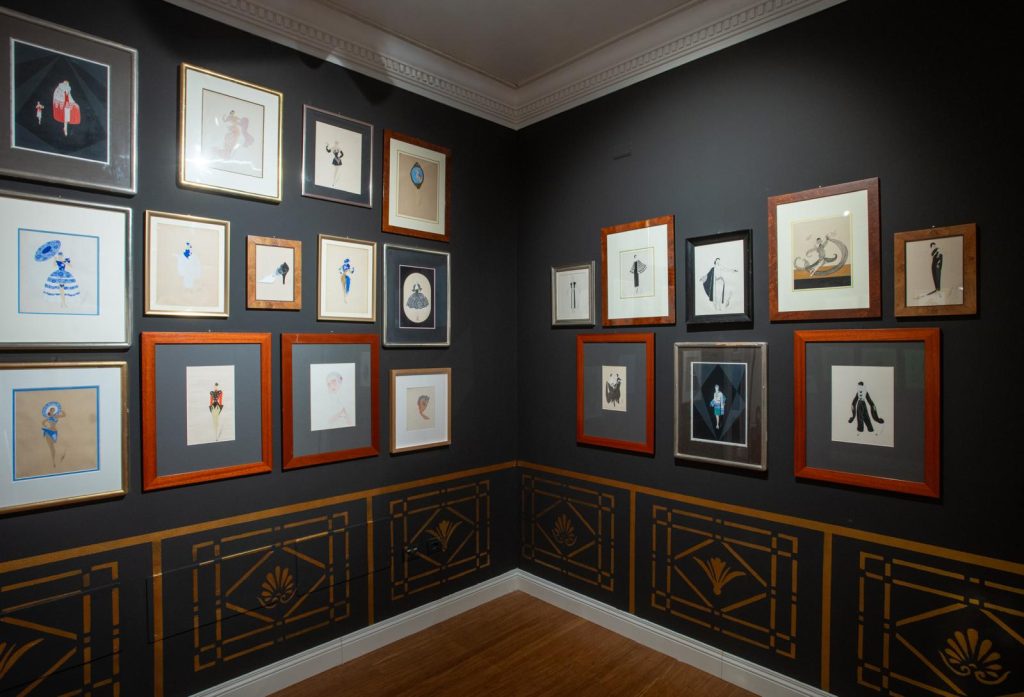
Labirinto della Masone is presenting a rich exhibition that explores his style through more than 150 works, including original drawings, sketches, photographs, documents and film materials. Not to be missed are the 28 works from the Franco Maria Ricci collection, alongside important loans from international private collections and the Victoria and Albert Museum in London.
But who was actually Erté, really?
Behind this pseudonym was Roman Petrovich Tyrtov, who later became Romain de Tirtoff (and eventually Erté, from the French pronunciation of his initials). He became one of the defining figures of Art Déco: a Russian artist who moved to Paris at the beginning of the twentieth century to follow his dreams. His family wanted him to pursue a military career, but Roman preferred spending his time in museums and drawing.
To fully understand his importance, it’s important to remember the historical moment in which he began working. In the early twentieth century, fashion photography did not yet dominate magazines. Covers were still illustrated by hand and artists were responsible for shaping and spreading the visual imagination of fashion.
Erté helped redefine a new image of femininity, more modern, sophisticated and theatrical. It was no coincidence that, shortly before World War I, Paul Poiret hired him as an illustrator. Poiret was a true revolutionary for the time and is often considered the first modern fashion designer. He famously freed women from the rigid structure of the corset.
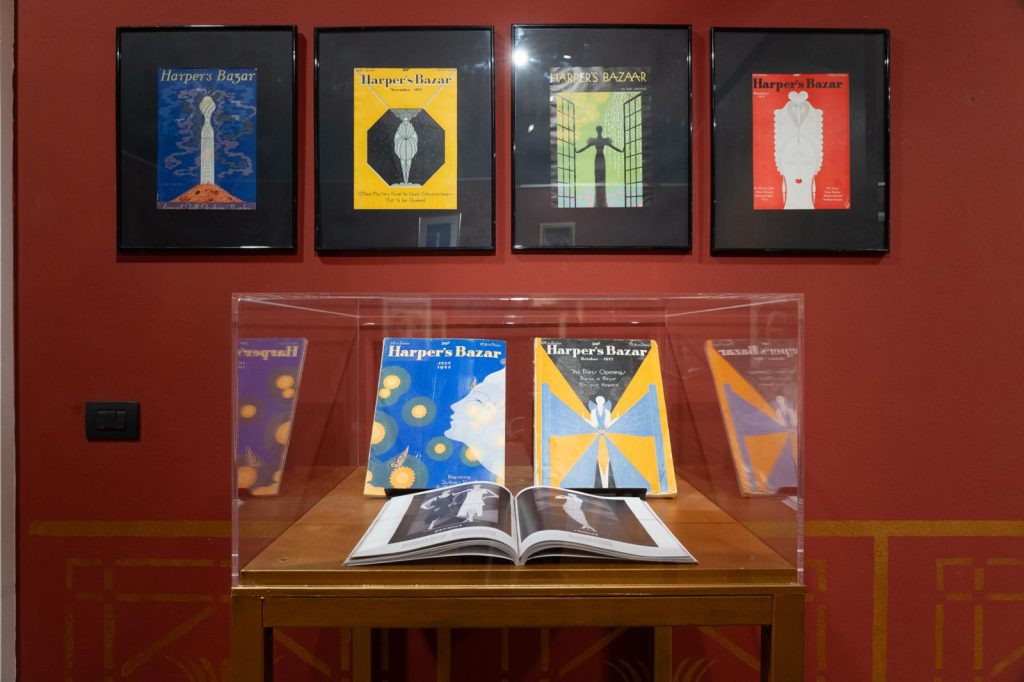
Erté’s illustrations soon appeared on the covers of Harper’s Bazaar, helping define the aesthetic of an entire era. In the following years, he also collaborated with Vogue, Cosmopolitan, The London News and several music magazines. His refined and visionary images transformed the way fashion was represented in major international publications.
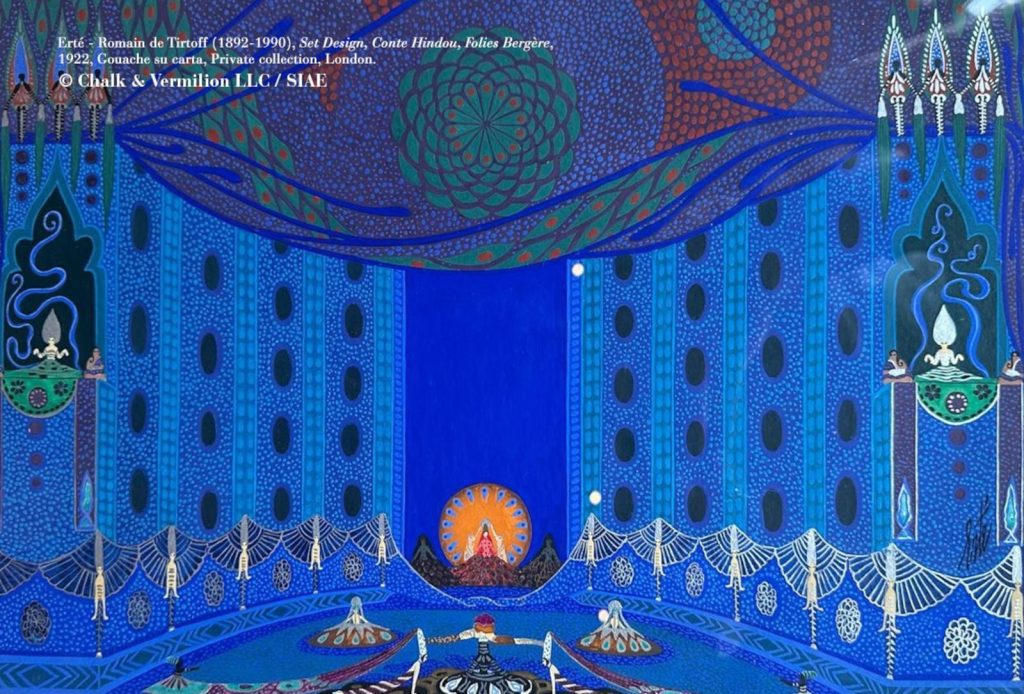
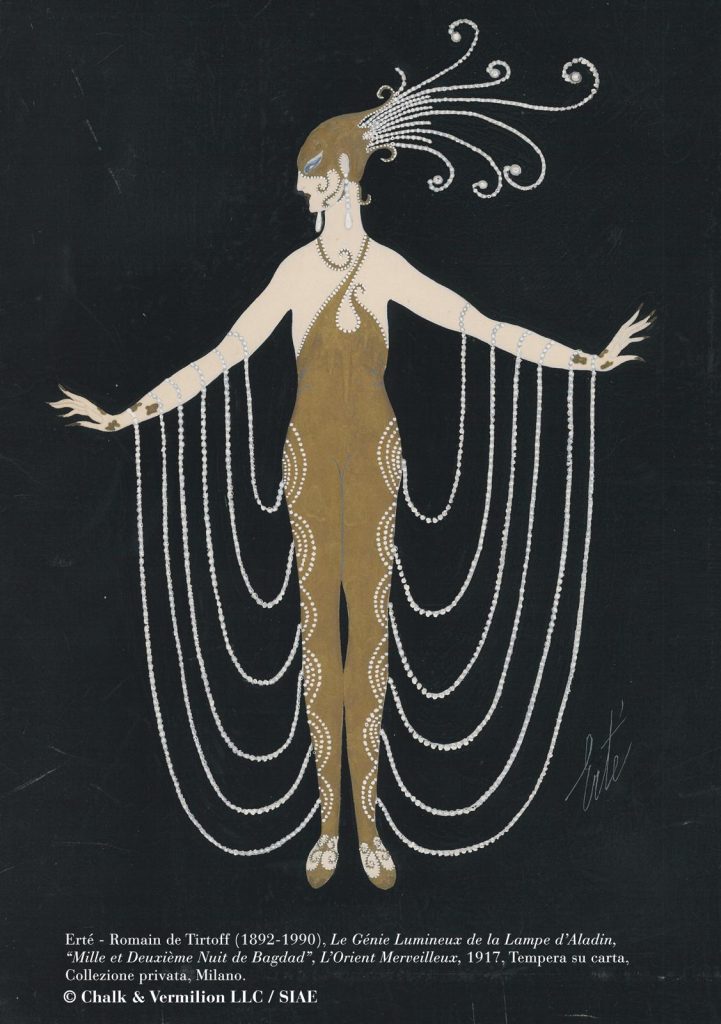
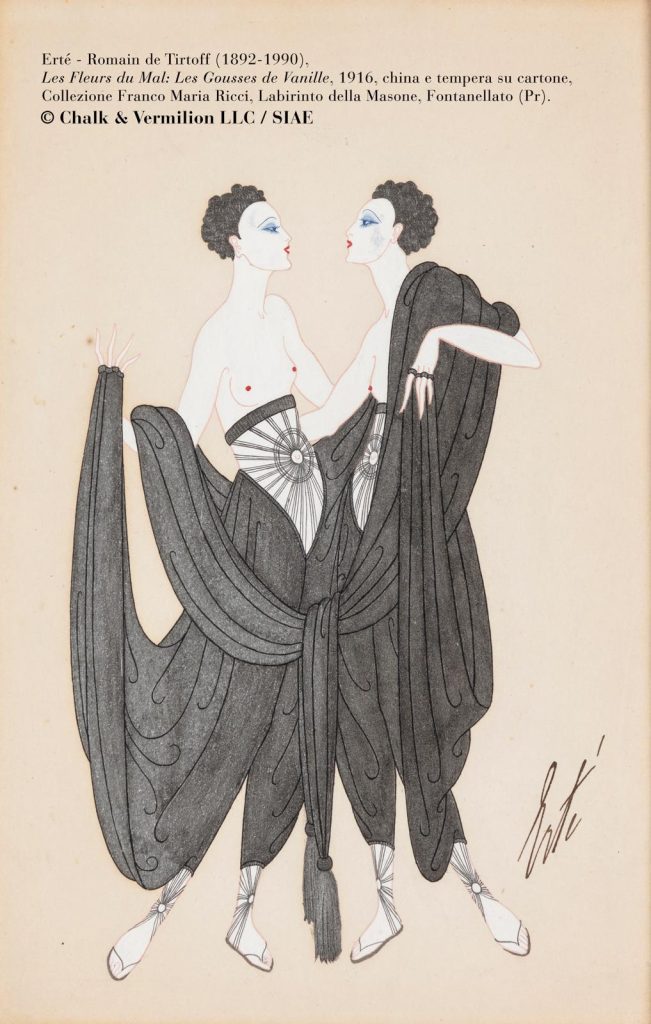
But his creative world went far beyond editorial illustration. Erté also designed theatrical costumes, stage sets, clothing and jewelry, working for iconic productions such as the Folies Bergère. His style, filled with fluid lines, luxury and exotic influences, perfectly embodied the spirit of Art Déco.
His visual language would later influence everything from burlesque aesthetics to modern runway shows.
“The Signs of Man”: Franco Maria Ricci tells the story of Erté in the first Italian monograph dedicated to the artist.
In 1970, Franco Maria Ricci decided to bring Erté’s visual world back into the spotlight.
Through this series, featuring texts by Roland Barthes, the publisher helped restore attention to an artist who had been partly forgotten after the decline of the Art Déco era.
Ricci recognized the modernity of an aesthetic built on luxury, elegance and seduction—a world that may seem tied to the past, yet still surprises us today.
More than fifty years after “The Signs of Man”, and over a century after the Paris exhibition that established Art Déco, Labirinto della Masone now celebrates this artistic heritage with the exhibition “Erté. Style is everything”.
But this will not be just a traditional exhibition. Visitors will have the chance to immerse themselves in Erté’s creative universe. The journey continues all the way through the era in which his works were created, while also revealing how his vision of women, elegance and show still feels incredibly modern today.
This sense of modernity is also highlighted by the presence of three creations by Caterina Crepax inspired by Erté’s sketches. The sculptural paper dresses created by the artist will accompany visitors throughout this journey into the world of Art Déco.
Honestly, if Pinterest had existed in the 1920s, Erté probably would have dominated every mood board.
So, what are you waiting for? His dazzling universe awaits at the Labirinto della Masone until June 28.
Erté. Lo stile è tutto
La visione geniale di Erté viene rivelata al grande pubblico questa primavera.
Il Labirinto della Masone presenta una ricca mostra che racconta il suo stile attraverso oltre 150 opere tra disegni originali, bozzetti, fotografie, documenti e materiali cinematografici. Da non perdere le 28 opere della collezione Franco Maria Ricci, insieme a importanti prestiti provenienti da collezioni private internazionali e dal Victoria and Albert Museum di Londra.
Ma chi era davvero Erté?
Dietro questo pseudonimo si nasconde Roman Petrovič Tyrtov, poi diventato Romain de Tirtoff (e infine Erté, dalla pronuncia francese delle iniziali del suo nome).
Fu uno dei volti simbolo dell’Art Déco: un artista russo trasferitosi a Parigi all’inizio del Novecento per inseguire i propri sogni. La famiglia lo voleva destinato alla carriera militare, ma Roman preferiva rifugiarsi nei musei e disegnare.
Per comprendere fino in fondo la sua importanza, bisogna ricordare il periodo storico in cui iniziò a lavorare. Nei primi anni del Ventesimo secolo la fotografia di moda non era ancora dominante. Le copertine delle riviste venivano illustrate a mano e agli artisti spettava il compito di creare e diffondere l’immaginario visivo della moda.
Erté contribuì così a ridefinire una nuova estetica femminile, più moderna, sofisticata e teatrale. Non fu quindi un caso che, poco prima della Grande Guerra, Paul Poiret lo assunse come illustratore. Lo stilista era un vero e proprio rivoluzionario per l’epoca: considerato il primo creatore di moda in senso moderno, liberò le donne dalla rigidità del corsetto.
Le illustrazioni di Erté finirono presto sulle copertine di Harper’s Bazaar, contribuendo a definire l’estetica di un’intera epoca. Negli anni successivi collaborò anche con Vogue, Cosmopolitan, The London News e numerose riviste musicali. Le sue immagini, raffinate e visionarie, trasformarono il modo di rappresentare la moda nelle grandi pubblicazioni internazionali.
Ma il suo universo creativo non si fermava all’editoria. Erté realizzò anche costumi teatrali, scenografie, abiti e gioielli, lavorando per spettacoli iconici come quelli delle Folies Bergère. Il suo stile, fatto di linee sinuose, lusso ed esotismi, incarnava perfettamente lo spirito dell’Art Déco.
Il suo linguaggio visivo avrebbe poi influenzato tutto, dall’estetica del burlesque alle sfilate di moda contemporanee.
“I segni dell’uomo”: Franco Maria Ricci racconta Erté nella prima monografia in italiano.
Era il 1970 quando Franco Maria Ricci decise di riportare alla luce il mondo visivo di Erté.
Attraverso questa collana, con i testi di Roland Barthes, l’editore contribuì a riportare l’attenzione su un artista che, dopo il tramonto dell’epoca Art Déco, era stato in parte dimenticato.
Ricci fu in grado di intuire la modernità di quell’estetica fatta di lusso, eleganza e seduzione. Un immaginario che sembrava appartenere al passato, ma che continua ancora oggi a sorprenderci.
Poco più di cinquant’anni dopo I segni dell’uomo e a oltre un secolo dall’esposizione parigina che consacrò l’Art Déco, il Labirinto della Masone celebra questo patrimonio artistico con la mostra “Erté. Lo stile è tutto”.
Ma non sarà una semplice esposizione. Il visitatore avrà l’occasione di immergersi nell’universo creativo di Erté. Il viaggio continuerà poi alla scoperta non solo dell’epoca in cui nacquero le sue opere, ma anche di quanto il suo sguardo sulle donne, sull’eleganza e sullo spettacolo appaia ancora incredibilmente contemporaneo.
La sua modernità viene sottolineata anche dalla presenza di tre creazioni di Caterina Crepax ispirate ai suoi bozzetti. Gli abiti-scultura realizzati dall’artista, interamente in carta, accompagneranno il visitatore in questo viaggio nel mondo dell’Art Déco.
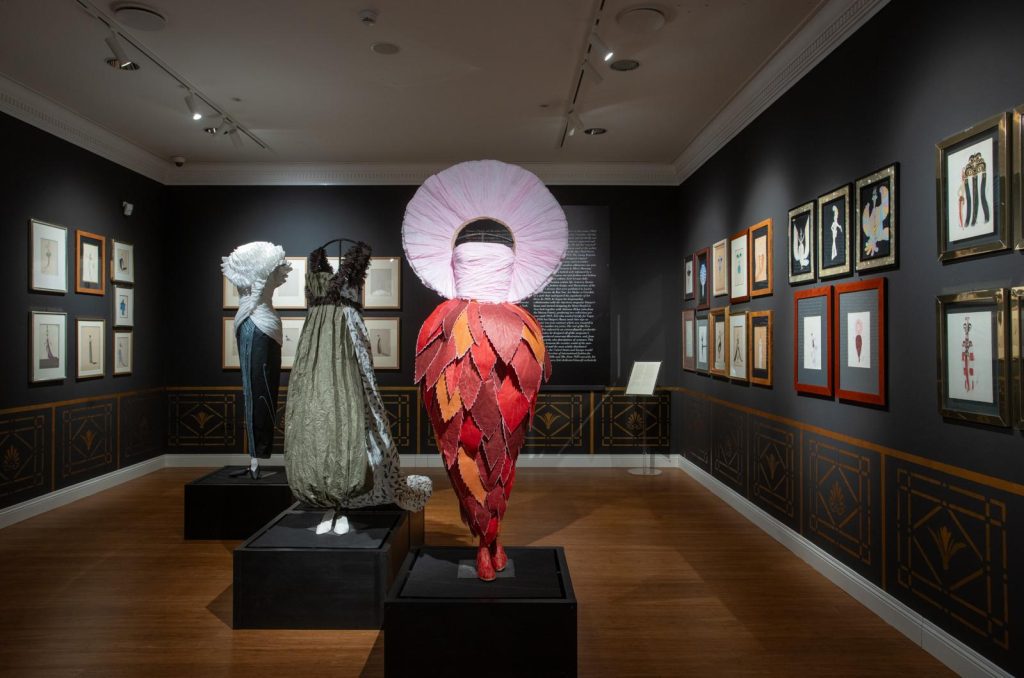
Probabilmente, se Pinterest fosse esistito negli anni Venti, Erté avrebbe dominato ogni bacheca.
Quindi, cosa state aspettando? Il suo universo scintillante vi aspetta fino al 28 giugno al Labirinto della Masone.