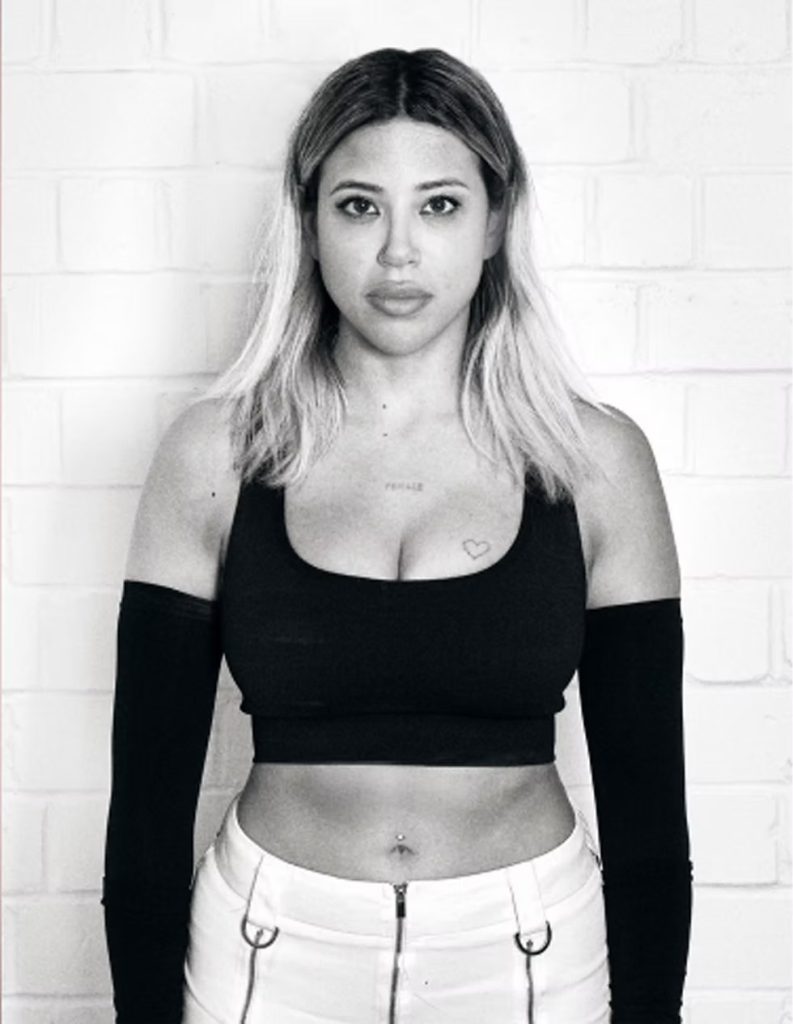
Il marchio londinese che evoca le fate della foresta e tutti i film di Barbie che ho visto da bambina (almeno così mi sembrava) è stato creato dalla designer italiana Elisa Trombatore.
Il suo sogno di avere un marchio è diventato realtà quando la sua collezione di laurea alla Central Saint Martins nel 2021 è stata sostenuta dalla Isabella Blow Foundation e pubblicata su molte delle riviste di moda più importanti come Vogue e i-D. Quello stesso anno il marchio ha iniziato a presentare le sue collezioni durante il calendario ufficiale della London Fashion Week due volte all’anno.
I valori del marchio inglese
Il suo stile caratteristico è una ribellione contro gli stereotipi, al fine di dimostrare il potere interiore e la bella contraddizione insita nella femminilità. È “dagli ambienti privi di potere che nascono le forze più potenti”, si legge sul suo sito web. Questo spiega come, attraverso la sua eredità siciliana e l’esperienza di una femminilità sottomessa durante la sua crescita, Elisa trovi una via di fuga nell’empowerment e nel raggiungere gli altri per renderli più forti.
Il suo modello di slow fashion crea una produzione in cui gli sprechi e le eccedenze di magazzino sono ridotti. Dreaming Eli ha una politica “made-to-order” in cui viene creato ciò che viene richiesto. Niente di più, niente di meno. L’uso di tessuti di fine serie e materiali vintage consente una circolarità che aiuta l’ambiente e la qualità dei capi. Il pianeta è felice e lo sono anche le persone i cui capi hanno una durata di vita più lunga.
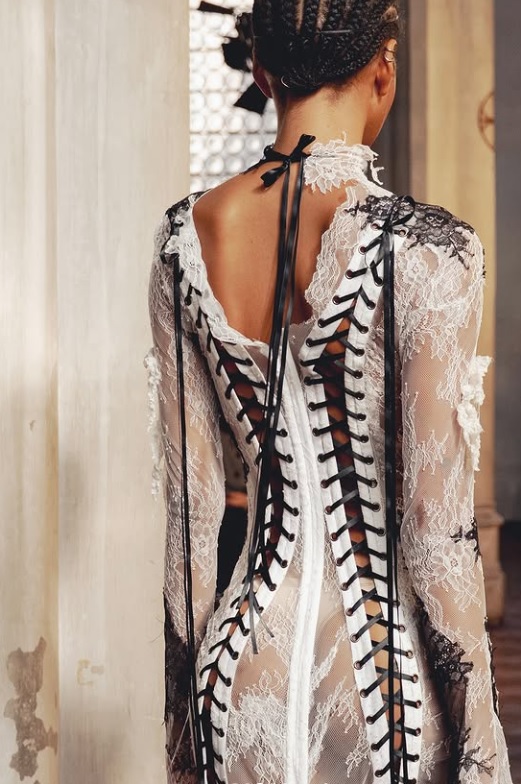
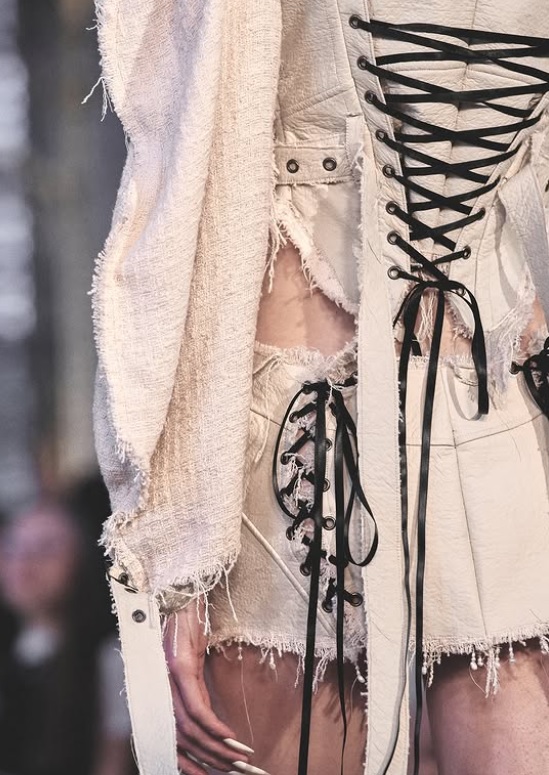
Oltre alla sostenibilità, l’inclusività è un punto di forza per i consumatori della Generazione Z. Consapevole di questo, il marchio inglese crea le sue collezioni incorporando elementi regolabili che vanno di pari passo con la durata dei capi. Le persone cambiano e così anche i corpi, e i capi di Dreaming Eli possono accompagnare questo processo.
Fiabba gotica empowered
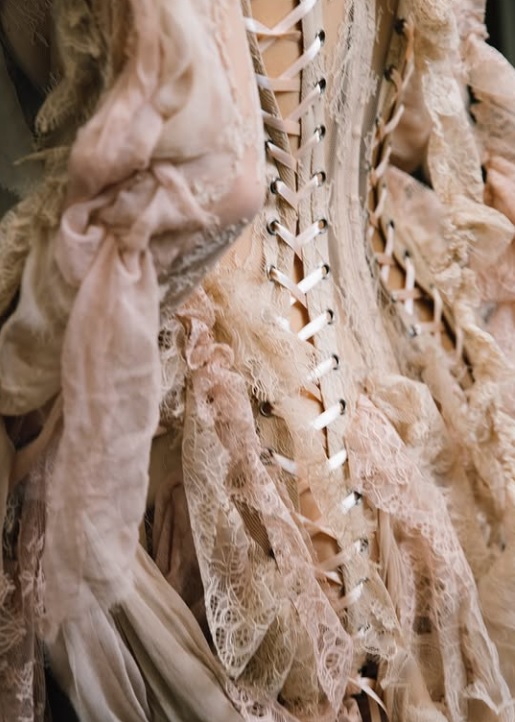
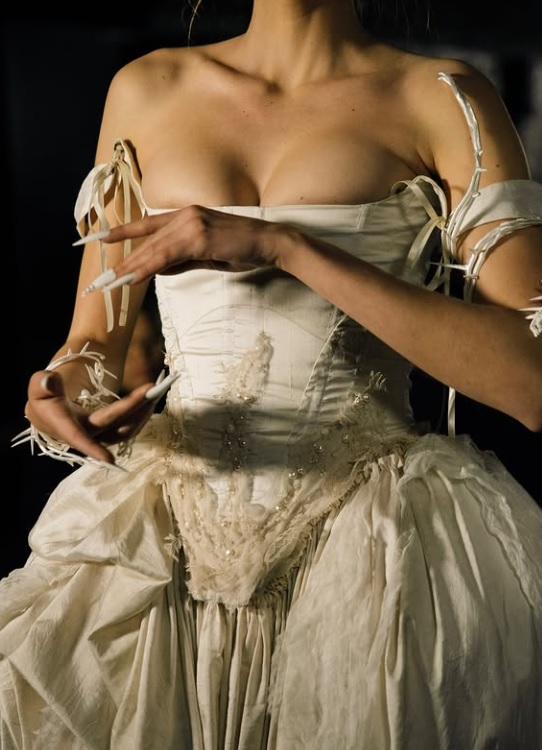
I corsetti e le fasce sono un must, così come gli strascichi e i sottili pezzi di tessuto che vengono trascinati mentre si cammina. L’uso del pizzo e dei drappeggi è caratteristico del suo marchio ed è ciò che gli conferisce la sua “atmosfera”. Mentre Cime Tempestose è al suo apice e nella mia mente, guardando la sua ultima collezione mi viene in mente una stessa atmosfera ma più audace. Un’estetica drammatica e gotico-fiabesca che non è ricercata, ma raggiunta.
Seta, pizzo Chantilly, tulle, chiffon e tessuti morbidi sono utilizzati per creare i suoi abiti simili a lingerie e riflettono la dualità tra la dolcezza della femminilità all’esterno e la forte potenza all’interno. Accentuare fianchi, vita e seno in diverse occasioni pone l’attenzione sul corpo femminile, valorizzando ogni sua parte che nel corso degli anni è stata fortemente sessualizzata.
L’approccio alla femminilità
Anche i nomi dati ai capi ci aiutano a capire dove vuole arrivare la stilista: “I Gave Birth to Myself” (Ho dato alla luce me stessa), “To Love, That Burns” (Amare, che brucia), “It Hunts Me Still” (Mi perseguita ancora) e “Thirst for Love” (Sete d’amore), e molti altri ancora. Sono tutti esempi dell’esperienza femminile come potere, ma anche come solitudine e consapevolezza di quella solitudine che arriva con l’età. Sentimenti estremi e l’inesperienza che ci portano a credere di essere sole e che l’adolescenza/femminilità sia un’esperienza solitaria.
Invece, con l’età e l’esperienza – oggi anche con i social media – iniziamo a renderci conto che le esperienze di femminilità sottomessa che Elisa Trombatore ha vissuto in Sicilia sono le stesse che ha vissuto un’altra ragazza crescendo a Buenos Aires. E probabilmente molte altre ancora. L’importanza di avere voci e la moda come mezzo per parlarne aiuta le altre generazioni a connettersi non solo con le parole, ma anche con i sentimenti. In questo caso, ciò si manifesta indossando qualcosa che, dal punto di vista della sostenibilità, dell’estetica e del valore, sembra proprio giusto.
ENGLISH VERSION
Dreaming Eli’s empowered fairies
The London-based brand that evokes fairies in a forest and every Barbie movie I’ve seen as a child (at least I thought) is created by Italian designer Elisa Trombatore.
Her dream of having a brand became reality when her Central Saint Martins graduate collection in 2021 was supported by the Isabella Blow Foundation and featured in many of the most relevant fashion magazines such as Vogue and i-D. That was the same year that the brand began showcasing their collections during the official calendar of London Fashion Week twice a year.
The English brand’s values
Her characteristic style is a rebellion against stereotypes in order to demonstrate the inner power and beautiful contradiction that’s inherent in femininity. It is “from powerless environments that the most potent forces arise,” reads on her website. This explains how, through her Sicilian heritage and the experience of submissive womanhood while growing up, Elisa finds an escape in empowerment and reaching out to others to empower them.
Its slow fashion model creates a production where waste and excess stock are reduced. Dreaming Eli has a “made-to-order” policy in which what is requested is created. Not more, not less. The use of deadstock fabrics and vintage materials allows a circularity that helps the environment and the quality of the garments. The planet is happy and so are the people whose pieces have an extended lifespan.
Besides sustainability, inclusivity is a strong point for Gen Z consumers. Knowing this, the English brand creates its collections incorporating adjustable elements going hand in hand with the lifespan of clothing. People change and so do bodies, and Dreaming Eli’s garments might accompany that process.
Empowered gothic tales
Corsets and bindings are a must, and so are trains and thin pieces of fabric that are dragged along while walking. The use of lace and draping are characteristic of her brand and are what give it its “vibe.” As Wuthering Heights is at its peak and in my mind, a more edgy vibe of its looks comes to mind while looking at her last collection. A dramatic and goth-fairy aesthetic is not looked for but achieved.
Silk, Chantilly lace, tulle, chiffon, and soft fabrics are used to create her lingerie-like clothes and reflect the duality between the sweetness of femininity on the outside and the strong power on the inside. Accentuating hips, waists, and breasts on different occasions puts the focus on the female body, empowering each part of it that over the years has been heavily sexualized.
An approach to femminility
Even the names given to the garments help us understand where the designer is aiming to go: “I Gave Birth to Myself,” “To Love, That Burns,” “It Hunts Me Still,” and “Thirst for Love,” and even more. These are all examples of the female experience as a power but also as a loneliness and a consciousness of that loneliness that comes with age. Extreme feelings and the inexperience that lead us to believe that we are alone and girlhood/womanhood is a solitary experience.
Instead, with age and experience-today also with social media-we start to realize that the experiences of submissive womanhood that Elisa Trombatore felt in Sicily are the same ones that another girl felt while growing up in Buenos Aires. And probably many more. The importance of having voices and fashion as a medium to speak about it helps other generations connect not only with words but with feelings. In this case, this manifests while wearing something that sustainably, aesthetically, and valuably feels just right.
Foto: Instagram account di @dreaming_eli