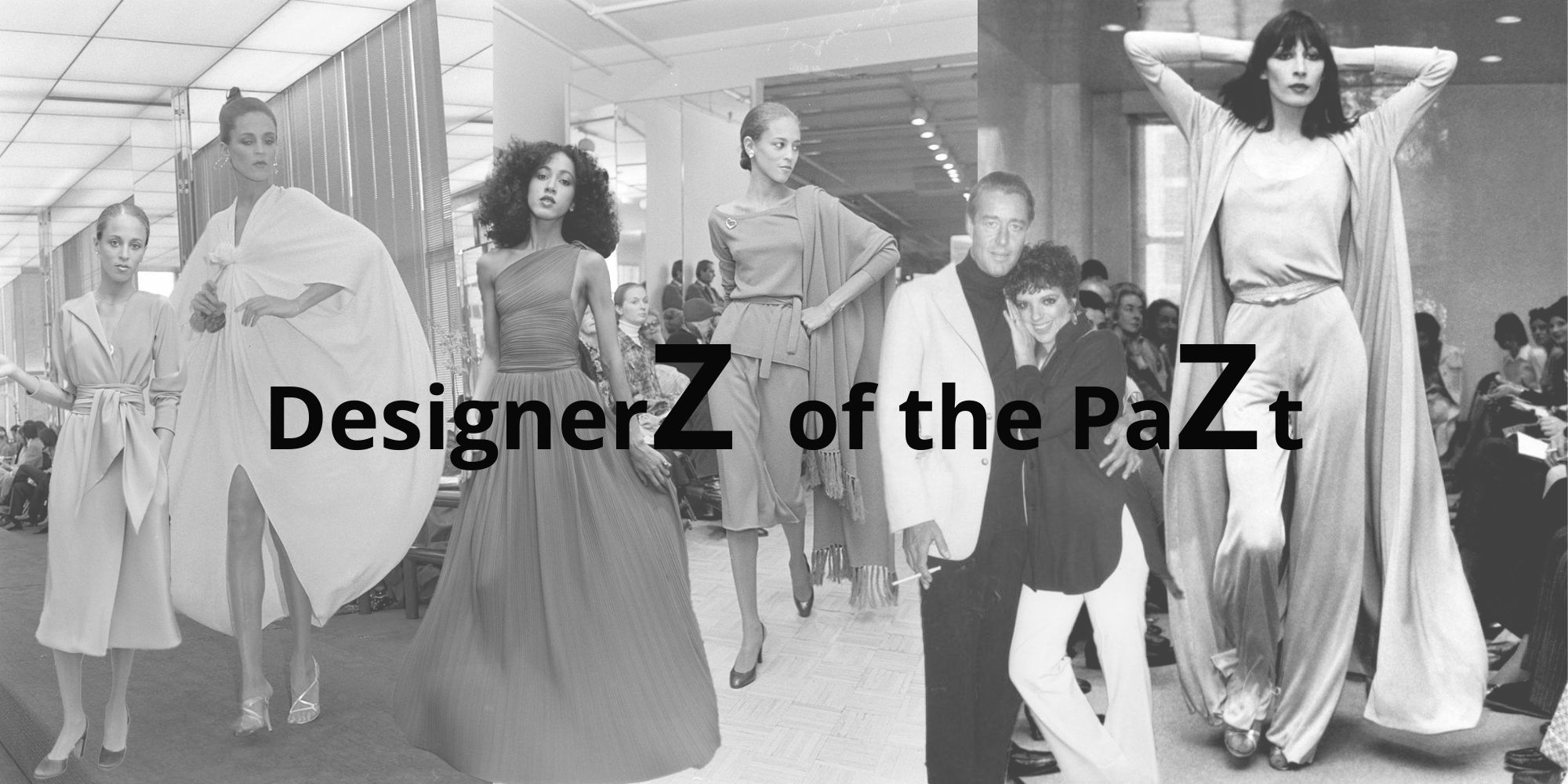
Non possiamo interpretare la moda contemporanea senza sapere chi ha aperto la strada agli stilisti di oggi. Oggi vi presentiamo Halston, uno stilista americano degli anni ’70 dallo stile minimalista e preciso.
“La moda nasce dalle persone alla moda… Nessuno stilista ha mai creato la moda da solo. Sono le persone a creare la moda”.
Benvenuti alla rubrica mensile che fa un passo indietro e guarda al passato. Nel mondo della moda odierno, la priorità è data al lato commerciale e non sempre al potere comunicativo della moda. Se guardiamo al passato, capiamo quanto gli stilisti di oggi ne siano influenzati e, tra nostalgia e tentativo di viralità, lo rivisitano. Il protagonista di oggi è Halston, riconosciuto come un maestro dell’arte in America.
Le collezioni di Halston erano minimaliste e sofisticate, ma nulla poteva eguagliare la sua aura iconica e il modo in cui illuminava una stanza quando entrava. I jersey di seta e gli abiti in Ultrasuede di Halston sono stati i fattori chiave e la ragione del suo successo. È stato uno degli stilisti americani che hanno segnato la moda degli anni ’70 e dei primi anni ’80.

Gli esordi del designer
La sua passione per la moda è iniziata quando era ancora bambino e cuciva abiti per sua sorella. Dopo essersi trasferito a Chicago, ha iniziato a lavorare come visual merchandiser presso Carson Pirie Scott per sostenere i suoi studi alla School of the Art Institute. Nel 1953 ha iniziato a lavorare come modista e ha attirato l’attenzione di molte star come Marlene Dietrich, Diana Vreeland, Rita Hayworth e la cliente che gli ha “regalato” il successo: Jackie Kennedy. Gli viene offerto un lavoro da Bergdorf Goodman come capo modista ed è nel 1961 che la moglie di John F. Kennedy indossa un cappellino a tamburello, ormai di tendenza, disegnato da Halston e apparso su tutti i giornali dell’epoca.

Fu allora che iniziò a formarsi il suo io egocentrico e megalomane. Tom Fallon, suo collega presso il grande magazzino americano, raccontò che non appena entrarono nell’edificio Halston era già lì. “La prima volta che lo fece, rimasi sorpreso, ma poi capii: stava indossando la sua maschera di Halston. La sua voce era cambiata e aveva a che fare con il gotha dell’epoca”.
Cosa ha fatto Halston?
Negli anni ’60, Roy Halston Frowick fondò il marchio che porta il suo nome con l’obiettivo di vestire le donne con abiti eleganti, minimalisti e raffinati. Ci riuscì. Il soprannome “Mr. Clean” non era casuale, dato che le sue silhouette pulite, precise e aperte permettevano a ogni donna di sentirsi a proprio agio. Halston iniziò a creare abiti nel 1966 e aprì il suo primo negozio in Madison Avenue solo due anni dopo. Le sue linee precise e l’assenza di “cuciture inutili” sono il cuore del suo stile e ben presto l’utilità delle sue morbide tute e dei lunghi caftani aprironno la strada alla nuova icona della moda.
I suoi capi più famosi erano i caftani ispirati a Wassily Kandinsky, le tute, gli abiti con scollo all’americana e l’abito chemise in Ultrasuede chiamato anche “modello 704”. Halston Limited, la sua prima collezione prêt-à-porter, fu lanciata nel 1969 con grande successo.


Innovazioni nel settore della moda
L’abito Ultrasuede era in realtà realizzato in pelle scamosciata lavabile in lavatrice e fu registrato da Halston nel 1972. Gli abiti dal taglio sbieco non furono una sua invenzione, ma, riprendendo le scoperte di Vionnet, egli pose l’America sulla mappa della moda. C’era una determinazione così forte in lui e nel suo marchio che negli anni ’70, durante la battaglia di Versailles, fu uno dei quattro stilisti a rappresentare il suo paese.
Inoltre, nel 1983, quando la sua carriera era all’apice, decise di collaborare con JCPenney, un famoso grande magazzino americano, per creare una nuova linea. Halston III era una linea di diffusione che offriva i suoi abiti al grande pubblico a un prezzo più basso. Purtroppo, l’iniziativa si rivelò controproducente e negozi come Martha’s e Bergdorf Goodman abbandonarono la sua linea principale, affermando che l’alta moda non doveva essere destinata al grande pubblico.
Era solito mescolare la sua vita lavorativa con quella personale, uscendo per locali con le sue muse come Elsa Peretti, anche lei stilista e collaboratrice del marchio per gli accessori e i flaconi dei profumi, Elizabeth Taylor e Pat Cleveland. Come le chiamava il fashion editor Andre Leon Talley: “Le Halstonettes”.

La sua vita
La sua fama crebbe non solo grazie ai suoi prodotti, ma anche alla sua presenza costante allo Studio 54, il club più esclusivo e famoso di New York, che lo rese un personaggio mondano. Se ripensiamo alla sua citazione, avere clienti come Liza Minnelli e Bianca Jagger lo aiutò sicuramente ad aumentare la sua popolarità e a capire cosa le donne desideravano e volevano indossare. L’immagine più famosa dello Studio 54 è quella della moglie di Jagger su un cavallo bianco che indossa un abito rosso di Halston, simbolo dell’apice della moda e dello stile di vita degli anni ’70.

La vita mondana e la perdita dei suoi soci a causa della linea di diffusione hanno portato Halston alla fine. La droga, l’irresponsabilità e la sua ricerca della perfezione lo hanno spinto ad approvare le collezioni solo in sua presenza, rallentando la produzione e l’efficienza. A metà degli anni ’80 il marchio è stato acquistato dal gruppo Borghese, che ha pagato lo stilista per non interferire più nelle attività quotidiane. Il fascino, il marketing e l’anima del marchio erano scomparsi e nel 1983 è arrivata la fine quando effettivamente viene licenziato dal suo proprio brand.
Halston e la moda contemporanea
Purtroppo, Halston è scomparso negli anni ’90 all’età di 57 anni a causa dell’AIDS. Per quanto riguarda la moda contemporanea e l’impronta che ha lasciato, il grande Tom Ford ha confessato che il suo look Studio 54 è stato fondamentale per la moda essenziale degli anni ’90. Poco prima di morire, Halston definì il suo lavoro come un esperimento rivoluzionario per l’epoca.
Il suo impatto non fu solo visivo, ma anche nell’uso dell’Ultrasuede e nella liberazione delle donne dagli abiti stretti, invitandole a sentirsi davvero a proprio agio in ciò che indossavano. Sono state realizzate varie serie TV e film in onore di Halston, che mescolano la necessità di parlare della sua eredità e delle sue innovazioni. Nel 2019 è uscito un film intitolato “Halston” del regista Frédéric Tcheng, nel 2021 è stata presentata una serie Netflix intitolata ‘Halston’, dove la finzione potrebbe prendere il sopravvento, e nel 2010 è uscito “Ultrasuede: In Search of Halston”.
La sua silhouette rilassata permetteva al corpo di muoversi liberamente e molti marchi ne hanno tenuto conto sin dal suo arrivo. Set coordinato di Calvin Klein, il minimalismo di Jil Sander e, come accennato prima, Gucci quando Tom Ford era il suo direttore creativo. Gli abiti con scollo all’americana oggi sono la norma, ma negli anni ’70 erano un’invenzione dell’era Halston. Trench impermeabili in pelle scamosciata, pantaloni a gamba larga, tessuti metallici e l’era disco che ricordiamo ancora oggi.
ENGLISH VERSION
Designerz of the Pazt: Halston
We cannot interpret contemporary fashion without knowing who paved the way for today’s designers. Today we present Halston, an American designer from the 1970s with a minimalist and precise design style.
“Fashion starts with fashionable people…No designer has ever made fashion alone. People make fashion.”
Welcome to the monthly column that takes a step back and looks to the past. In today’s fashion world, priority is given to the commercial side and not always to the communicative power of fashion. If we look to the past, we understand how much designers today are influenced by this, and between nostalgia and an attempt at virality, they revisit it. Today’s protagonist is Halston, who was recognized as a master of the art in America.
Halston’s collections were minimal and sophisticated, but nothing could compare to his iconic aura and the way he lit up a room when he walked in. At Halston’s silk jerseys and clothes made from Ultrasuede were the key factors and the reason for his success. He was one of the American designers that marked fashion during the 1970s and early 1980s.

The designer’s beginnings
His passion for fashion actually started when he was still a child and sewed dresses for his sister. After moving to Chicago, he started working as a visual merchandiser at Carson Pirie Scott to sustain his studies at the School of the Art Institute. In 1953 he started working as a milliner and caught the attention of many stars such as Marlene Dietrich, Diana Vreeland, Rita Hayworth and the client who “got him” his success: Jackie Kennedy. He was offered a job at Bergdorf Goodman as a Head Milliner and it was in 1961 when the wife of John F. Kennedy wore a pillbox hat, now a trend, designed by Halston and made an appearance in every newspaper of the time.
This was when his egocentric and megalomaniac self started to form. Tom Fallon, his colleague at the American department store, said as soon as they got into the building Halston was already there. “The first time he did it, I was surprised, but then I understood: he was putting on his Halston mask. His voice changed and he was dealing with the crème de la crème of the time.”
What has Halston done?
In the 1960s, Roy Halston Frowick founded his namesake brand looking to dress women in elegant, minimal, and graceful clothes. He accomplished it. Getting the nickname “Mr. Clean” was not a mistake given that his clean, precise, and open silhouettes allowed every woman to feel comfortable. Halston started creating clothes in 1966 and opened his first store on Madison Avenue just two years later. His precise lines and avoidance of “unuseful stitches” are the heart of his style and soon the utility of his soft jumpers and long caftans paved the way to the new icon of fashion.
His most famous pieces were caftans inspired by Wassily Kandinsky, jumpsuits, halter dresses, and the Ultrasuede chemise dress also called “model 704.” Halston Limited, his first prêt-à-porter collection, was launched in 1969 with great success.


Innovations in the fashion industry
The Ultrasuede dress was actually made from suede that could be washed inside the washing machine and was registered by Halston in 1972.The biased-cut clothes were not an invention of his but, taking back Vionnet’s discoveries, he put America on the fashion map. There was determination in himself and in his brand in such a strong way that during the 70s, during the battle of Versailles, he was one of the four designers to represent his country.
Also, in 1983, when his career was at its peak, he decided to partner with JCPenney, a famous American department store, to create a new line. Halston III was a diffusion line that offered his clothes to the masses at a lower price point. Unfortunately, it backfired and stores like Martha’s and Bergdorf Goodman left his principal line, stating that couture shouldn’t be for the masses.
He used to mix his work life with personal life, going out clubbing with his muses like Elsa Peretti, also a designer and contributor to the brand’s accessories and perfume bottle, Elizabeth Taylor, and Pat Cleveland. As fashion editor Andre Leon Talley used to call them: “The Halstonettes.”
His life
His fame rose not only for his products but the constant attendance at Studio 54, New York’s most exclusive and famous club, making him a social figure. If we think back to his quote, having clients like Liza Minnelli and Bianca Jagger definitely helped him rise in popularity and in knowing what women needed and wanted to wear. The most famous picture of Studio 54 is Jagger’s wife on a white horse wearing a red Halston dress and signifying the peak of 70s fashion and lifestyle.
Clubbing and losing his partners due to the diffusion line started taking Halston to the end. Drugs, irresponsibility and his own search for perfection drove him to approve collections only in his presence, slowing production and efficiency. Mid 80s the brand was bought by Borghese group and paid the designer to not interfere anymore in the daily activities. The charm, marketing and soul of the brand was gone and in 1983 arrived to the end when he was fired from his own brand.
Halston and contemporary fashion
Sadly, Halston passed away in the 1990s at 57 years old due to AIDS. When it comes to contemporary fashion and the mark he left, the great Tom Ford has confessed himself that his Studio 54 look was crucial to uncluttered fashion in the 90s. Shortly before dying, Halston defined his work as an experiment that was revolutionary of the time.
His impact wasn’t only visual but the use of Ultrasuede and liberating women from tight clothes and inviting them to actually feel comfortable in what they are wearing. Various TV series and films have been made in honour of Halston mixing the need to talk about his legacy and his innovations. In 2019 a film called “Halston” by director Frédéric Tcheng, a Netflix series called “Halston” was presented in 2021 where fiction might take the reins and “Ultrasuede: In Search of Halston” from 2010.
His relaxed silhouette allowed the body to move freely and many brands have taken this into account since his arrival. Matching set from Calvin Klein, Jil Sander’s minimalism and, as mentioned before, Gucci when Tom Ford was its creative director. Halter dresses today are the norm but an invention back in the 70s under Halston’s era. Suede waterproof trenches, wide-leg pants, metallic fabrics, and the disco era that we recall even today.
Foto: Pinterest