These re-editions carry a story that celebrates each of us: not only are the bags works of art, but we are too.
Everyone knows themselves better than anyone else: better than friends, family, partners. And yet, translating that into something visible is complicated. Words are surely not enough. Gestures help, but they’re still incomplete. So what actually captures a personality?
According to Maria Grazia Chiuri, it might be something as simple and as personal as a bag.
From its first appearance in 1997, the Fendi Baguette has never been just an accessory. Since then, it has continuously transformed and shaped fashion aesthetics: it can be bold, minimal, excessive, ironic. It can be whatever you need it to be.
And the original versions? As amazing as they are, they’re also hard to find in good condition on today’s market. But Maria Grazia Chiuri, Fendi’s new creative director after shaping Dior’s vision for nine years, has responded to our desire. The Baguette 26424 Re-Edition are being presented during Milan Design Week 2026 at Palazzo Fendi.
The Fendi Baguette has finally made its comeback, not only stronger than ever, but also more desired than ever.
We already had a sneak peek on the Fall/Winter 26–27 runway, and that only hyped us more.
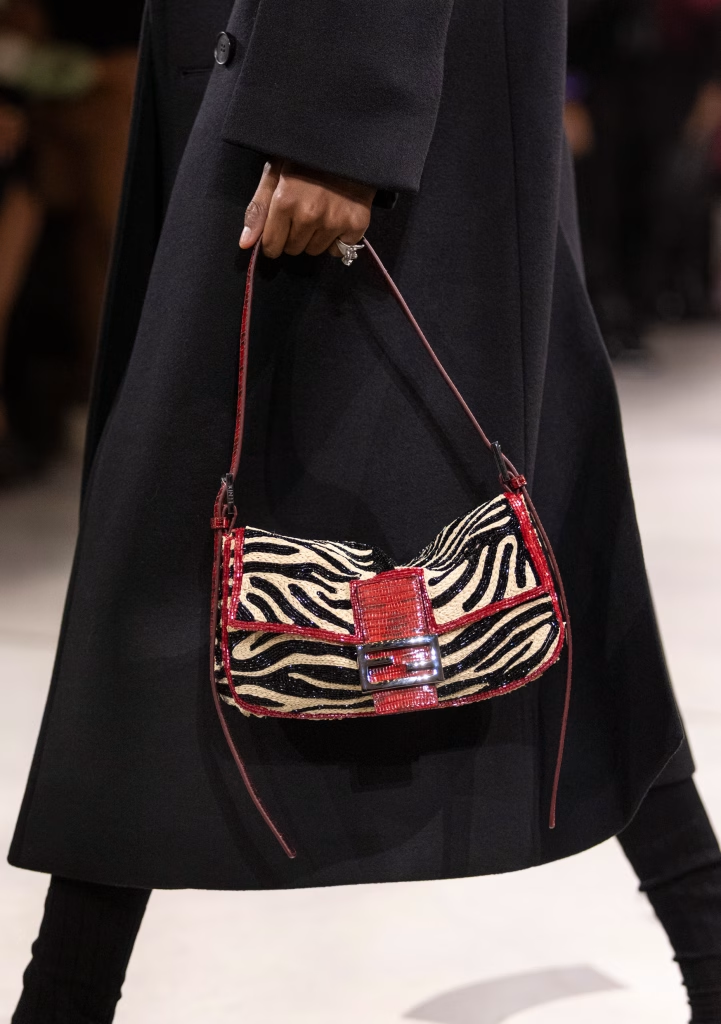
Its shape returns very close to the original 90s version. The compact, elegant silhouette is designed to sit perfectly under the arm—exactly like a French baguette. That, along with the many creative variations released over time, marked a turning point in a decade defined by minimalism.
The it-bag now comes in twenty editions drawn from the brand’s historical archive, each one exploring a different aesthetic. They all play with color, texture and craftsmanship. Some are covered in sequins and beads; others are simpler and more composed in leather or wool; a few stand out for colorful hand embroidery framing small mirrors or animal-printed pony hair.
However, what makes them so special is not only how they look, but how they’re made. Each piece reflects the work of highly skilled artisans and every decoration becomes a form of art rather than simple embellishment.
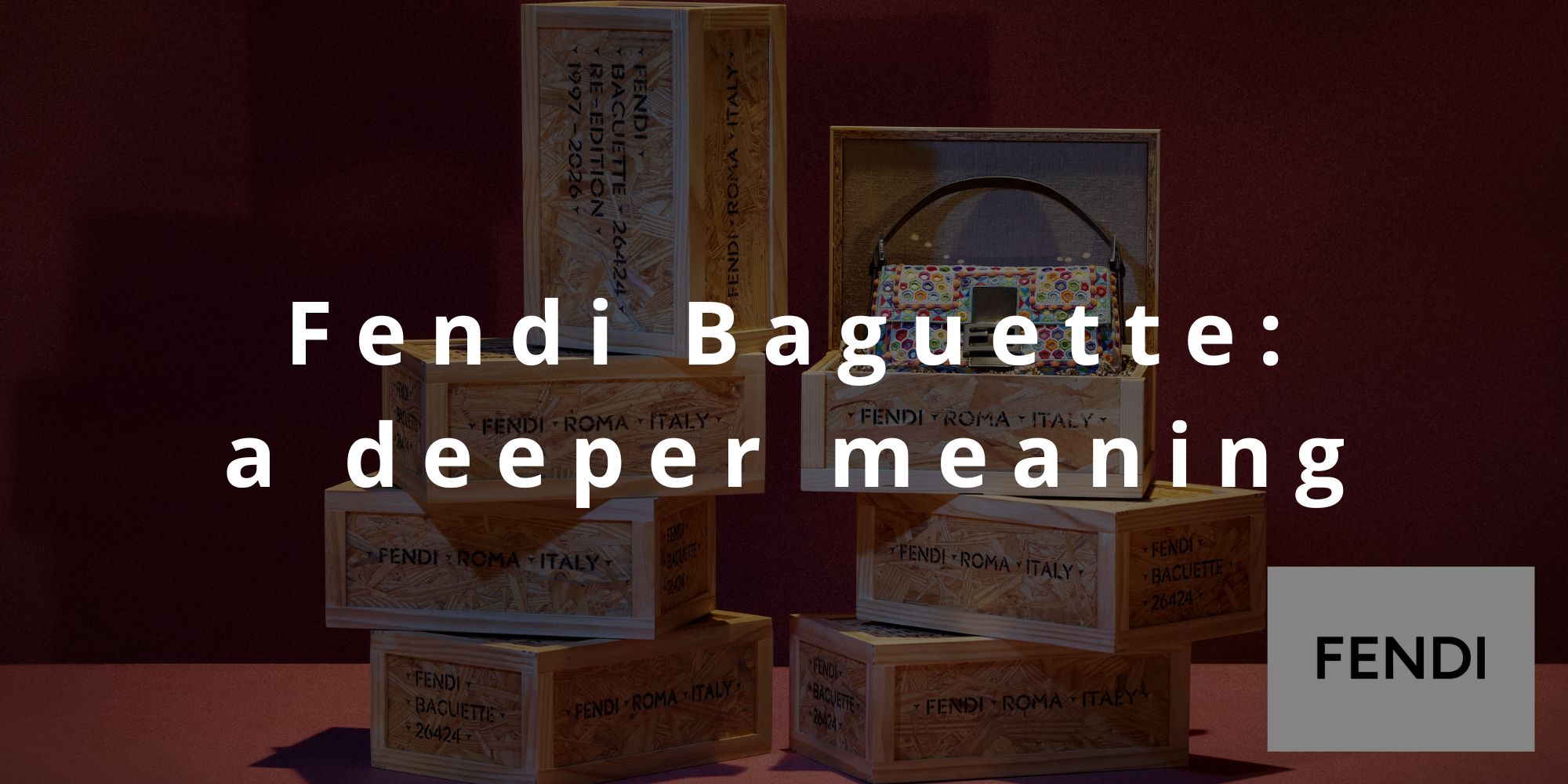
Even the packaging reflects their value. The bags are presented in custom boxes inspired by those used to transport artworks. In this way, each Baguette appears as a collectible object, instead of just a fashion accessory.
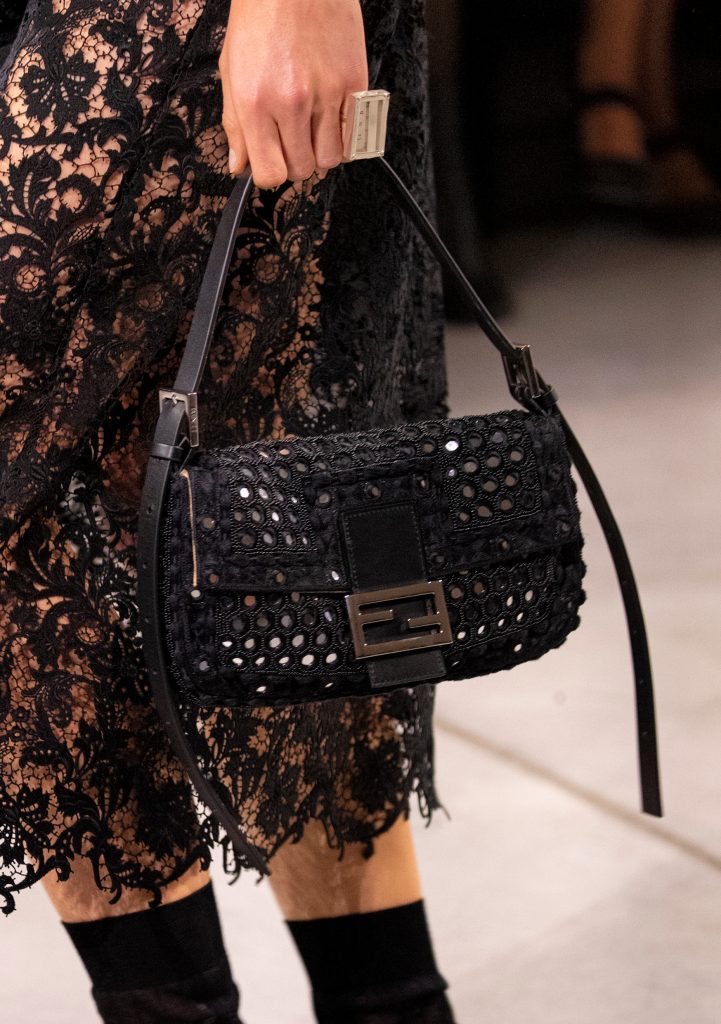
But beyond all these details there’s a more interesting question. If every re-edition is different, what does the one you choose say about you?
It’s true, fashion speaks. It creates an impression before any word is said. And such a it-bag almost instinctively frames how others might perceive you. In some ways, it can reveal something that words could never say. It doesn’t require time or attention to be “heard”. It’s immediate. A Fendi Baguette, chosen in a certain version and worn in a certain way, can be more honest than any self-description.
And that raises another question: if someone opened your Baguette, what would they find?
Like the cookies Marilyn Monroe once hid in her bag, the objects you carry inside are chaotic traces that slowly unfold your true self. Things you forgot to throw away, things you keep just in case or perhaps things that don’t make sense to anyone but you.
They are strangely revealing because they are not performative. Truman Capote didn’t understand Marilyn by looking at her fame or her looks, but by noticing what she carried.
Maybe that’s exactly the point: looking beyond appearances to understand what we keep beneath them.
So, after all, we could say that the Fendi Baguette is the object that reflects your personality the most.
At first glance, it says something immediate through its colors, materials and the attitude with which you carry it. It gives a quick, instinctive impression.
But as you look inside, you find the rest of the story. That’s where things become less controlled and more real.
Just like an artwork. At first, it might simply look beautiful—something you recognize instantly. Yet the more you look at it, the more it reveals details and meanings you hadn’t noticed before.
A Baguette works the same way. It’s not meant only to be seen, but to be discovered, layer by layer.
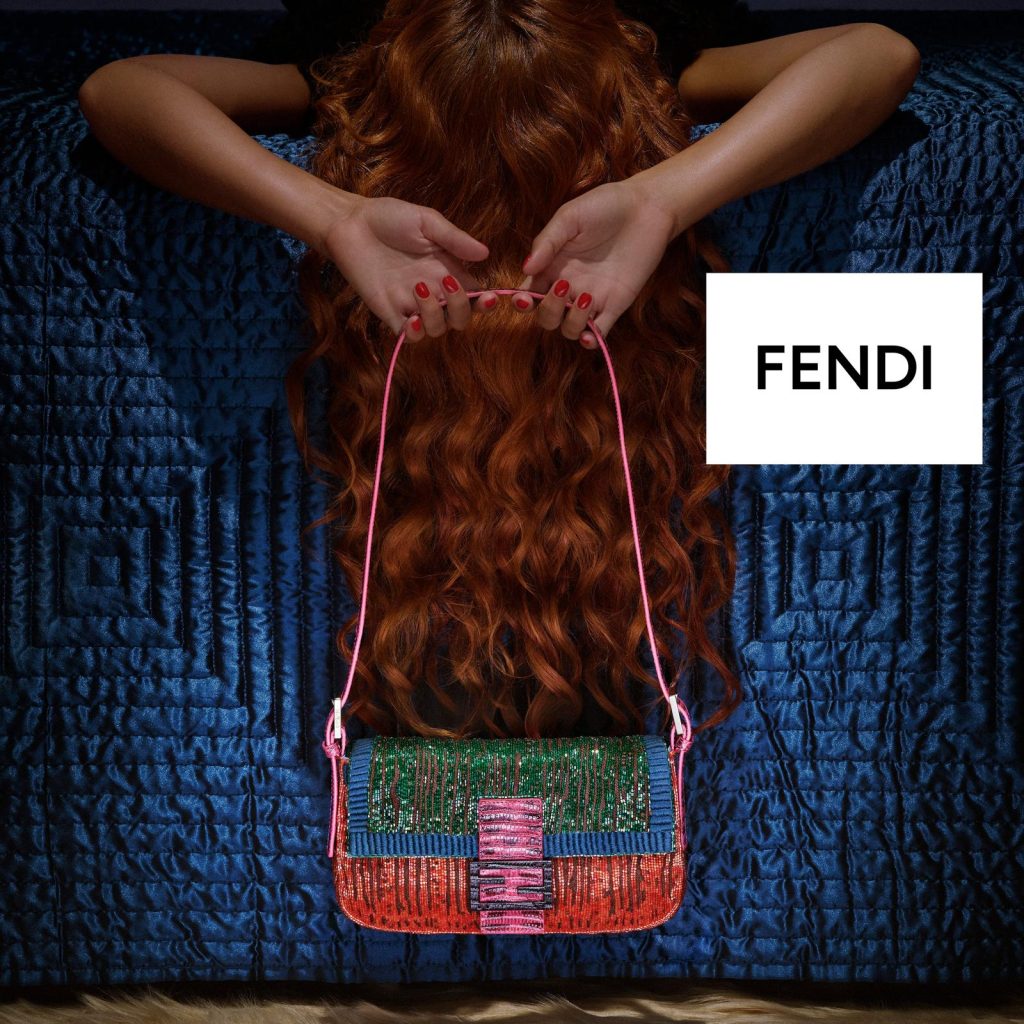
Fendi Baguette: un significato più profondo
Queste re-edition raccontano una storia che parla di ognuno di noi: non solo le borse sono opere d’arte, ma lo siamo anche noi.
Ognuno si conosce meglio di chiunque altro: meglio degli amici, della famiglia, dei partner. Eppure trasformare tutto questo in qualcosa di visibile è complicato. Le parole non bastano quasi mai. I gesti aiutano, ma restano incompleti. Quindi cosa può effettivamente raccontare una personalità? Secondo Maria Grazia Chiuri, potrebbe essere qualcosa di semplice e allo stesso tempo personale, come una borsa.
Dalla sua prima apparizione nel 1997, la Fendi Baguette non è mai stata solo un accessorio. Da allora ha continuato a trasformarsi e a influenzare l’estetica della moda: può essere bold, minimal, eccessiva, ironica. Può essere qualsiasi cosa tu voglia in quel momento.
E le versioni originali? Bellissime, ma anche difficili da trovare in buone condizioni sul mercato. Ma Maria Grazia Chiuri, nuova direttrice creativa di Fendi, dopo aver guidato la visione di Dior per nove anni, ha risposto a questo desiderio. Durante Milan Design Week 2026, a Palazzo Fendi potrete vedere le Baguette 26424 Re-Edition.
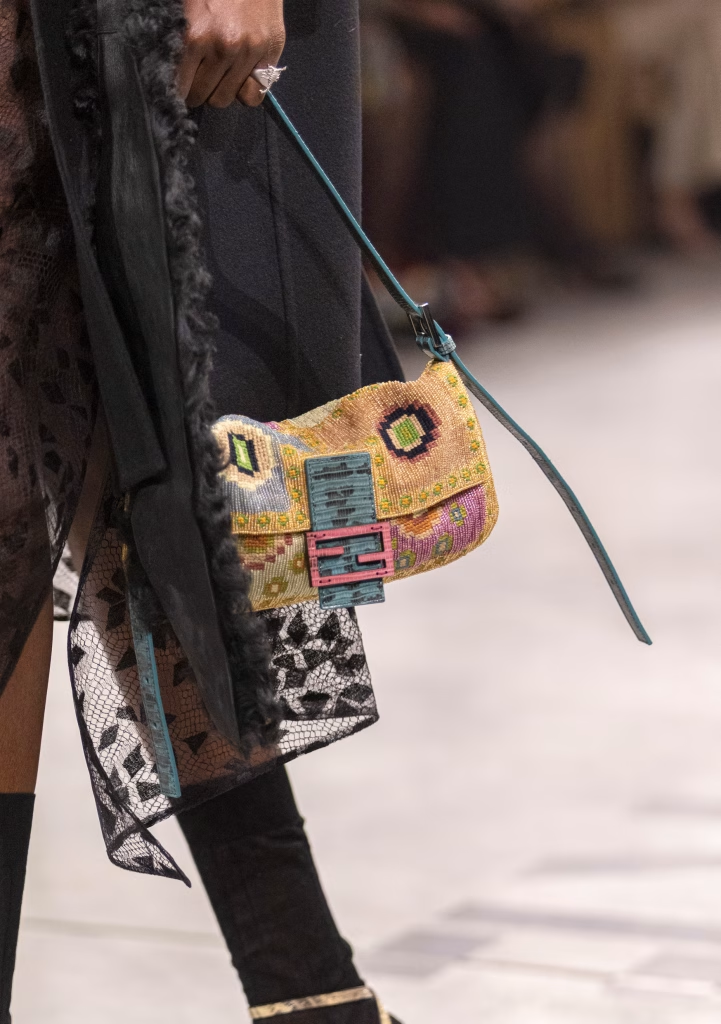
La Fendi Baguette è tornata ufficialmente, non solo più forte di prima, ma anche più desiderata che mai.
L’abbiamo già vista in anteprima sulla passerella Fall/Winter 26–27, e questo non ha fatto altro che aumentare l’hype.
La sua forma torna molto vicina a quella originale degli anni ’90: una silhouette compatta ed elegante pensata per stare perfettamente sotto il braccio—proprio come una baguette francese. Questo, insieme alle varie reinterpretazioni rilasciate alla fine del secolo scorso, ha segnato un punto di svolta in un decennio dominato dal minimalismo.
L’it-bag oggi arriva in venti versioni prese dall’archivio storico del brand, ognuna con un’estetica diversa. Giocano tutte con colore, texture e lavorazioni. Alcune sono ricoperte di paillettes e perline, altre più pulite e “composte” in pelle o lana, altre ancora si distinguono per ricami colorati fatti a mano che incorniciano piccoli specchi o per il cavallino con stampa animalier.
Quello che le rende davvero speciali però non è solo come appaiono, ma come sono fatte. Ogni pezzo riflette il lavoro di artigiani esperti e ogni decorazione diventa una forma d’arte, non un semplice dettaglio.
Anche il packaging riflette questo valore: le borse vengono presentate in scatole ispirate a quelle usati per trasportare opere d’arte. Così, ogni Baguette diventa quasi un oggetto da collezione, più che un semplice accessorio.
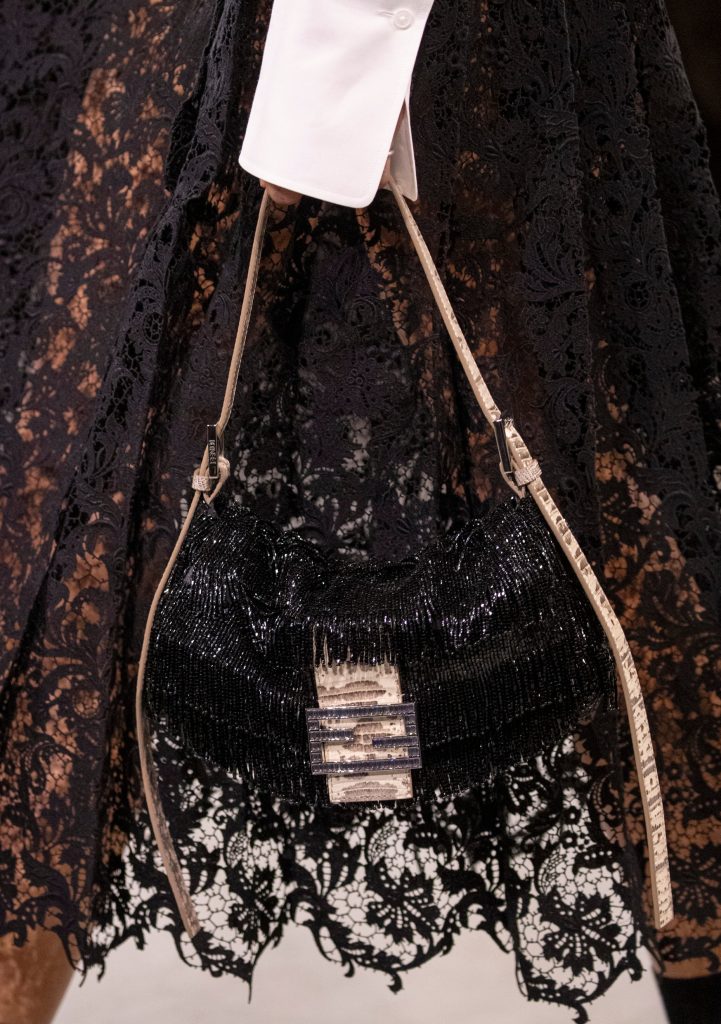
Ma oltre a tutti questi dettagli, c’è una domanda più interessante. Se ogni re-edition è diversa, cosa dice di te quella che scegli?
È vero, la moda parla. Crea un’impressione prima ancora che tu dica una parola. E un’it-bag così finisce quasi automaticamente per mostrare come gli altri ti percepiscono.
In un certo senso può dire cose che le parole non riescono a dire. È immediata. Una Baguette Fendi, scelta in una certa versione e portata in un certo modo, può essere più sincera di qualsiasi descrizione di sé.
E allora viene da chiedersi: se qualcuno aprisse la tua Baguette, cosa troverebbe?
Come i biscotti che Marilyn Monroe una volta nascose nella sua borsa, gli oggetti che porti dentro sono tracce caotiche che piano piano raccontano chi sei davvero. Cose che hai dimenticato di buttare, cose che tieni “nel dubbio” o cose che hanno senso solo per te.
Sono strane proprio perché non sono performative. Truman Capote non riuscì a capire Marilyn guardando la sua fama o il suo aspetto, ma osservando quello che portava con sé.
Forse è proprio questo il punto: andare oltre l’apparenza per capire cosa teniamo sotto tutto quello che mostriamo.
Alla fine, potremmo dire che la Baguette è l’oggetto che più di tutti riflette la tua personalità.
A prima vista dice qualcosa di immediato attraverso colori, materiali e il modo in cui la porti. Ti dà un’impressione istintiva.
Ma poi, quando ci guardi dentro, trovi il resto della storia. Ed è lì che le cose diventano meno controllate e più vere.
Proprio come un’opera d’arte: all’inizio è semplicemente bella, qualcosa che riconosci subito. Ma più la guardi, più scopri dettagli e significati che prima non vedevi.
Una Baguette funziona allo stesso modo. Non è fatta solo per essere vista, ma per essere scoperta, strato dopo strato.
Foto: Fendi
Per approfondire:
– Maison Fendi;
– Palazzo Fendi;
– Maria Grazia Chiuri.