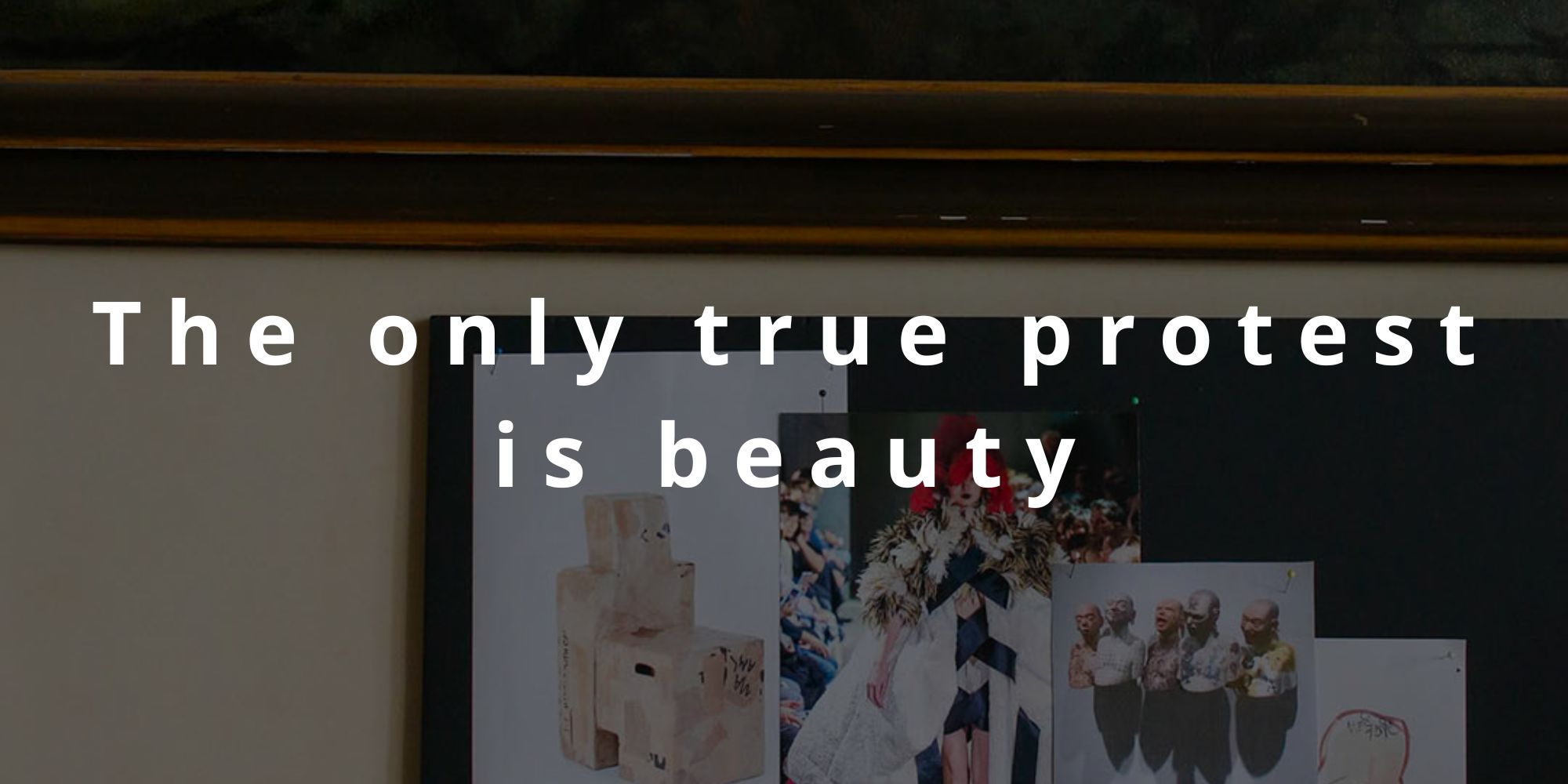
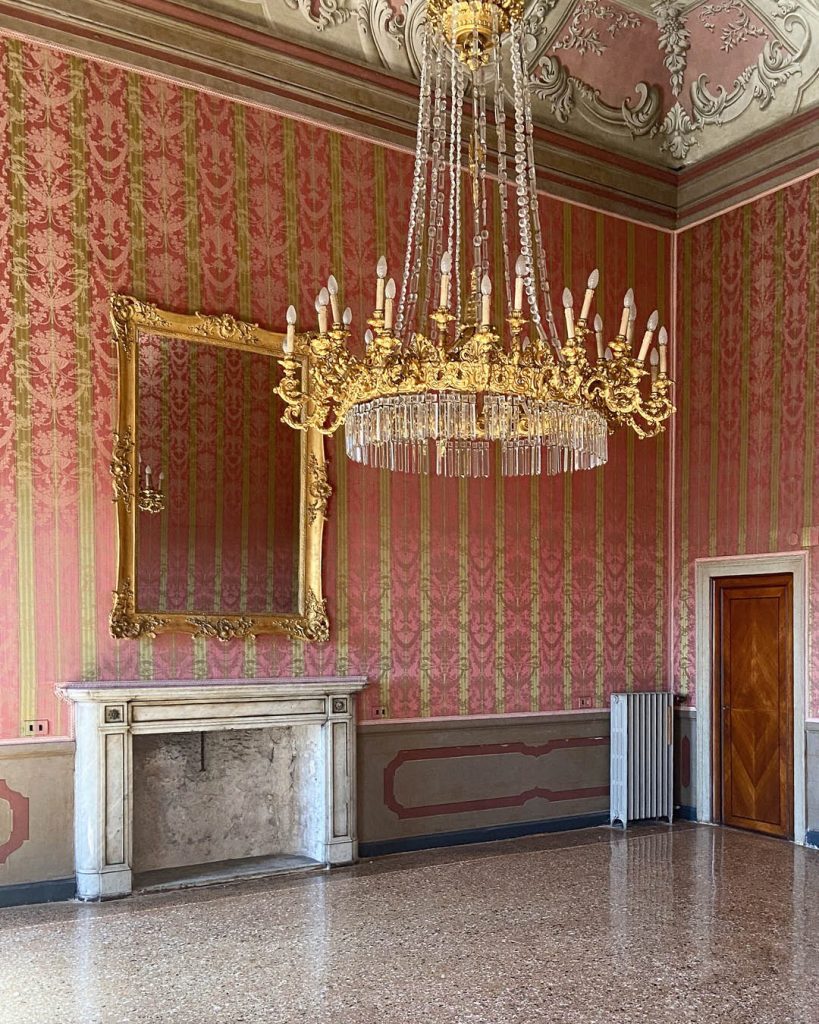
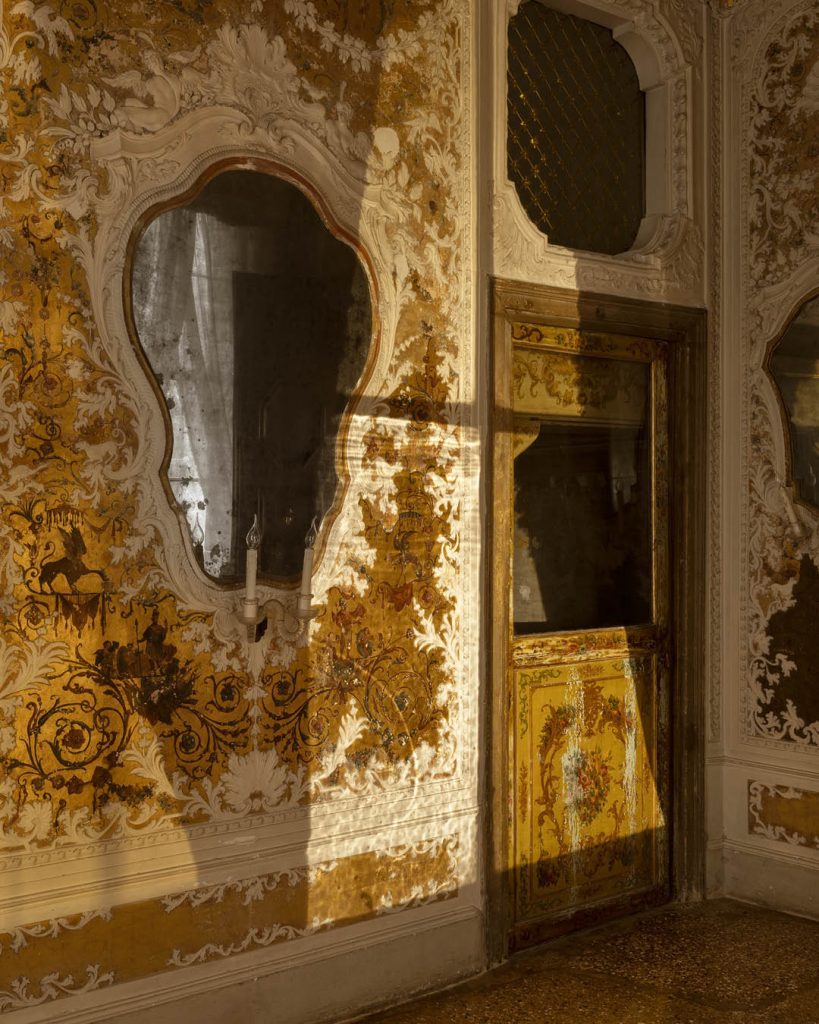
From April 25 to October 4, Palazzo Pisani Moretta will host the latest presentation by Fondazione Dries Van Noten, and it promises to be anything but conventional. If you happen to be in Venice, you can’t miss it!
At first glance, it might sound familiar: an exhibition dedicated to beauty. But here, beauty is not treated as something simply decorative. Instead, it becomes a tool capable of provoking thought and opening space for reflection.
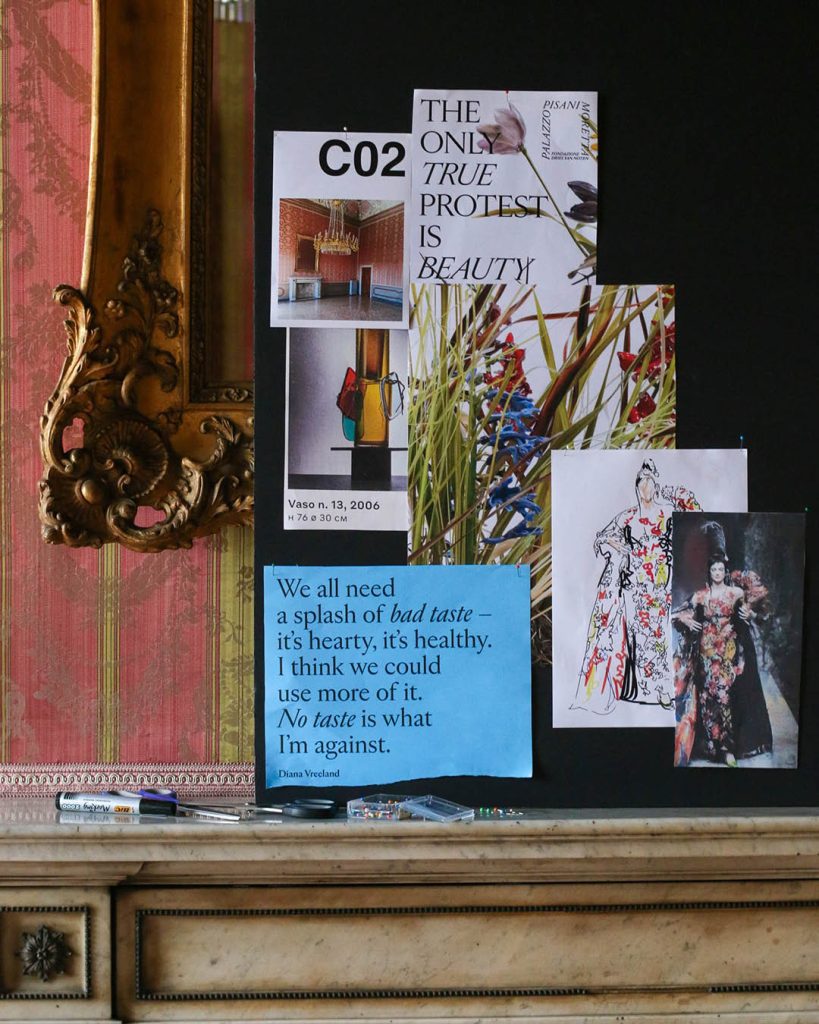
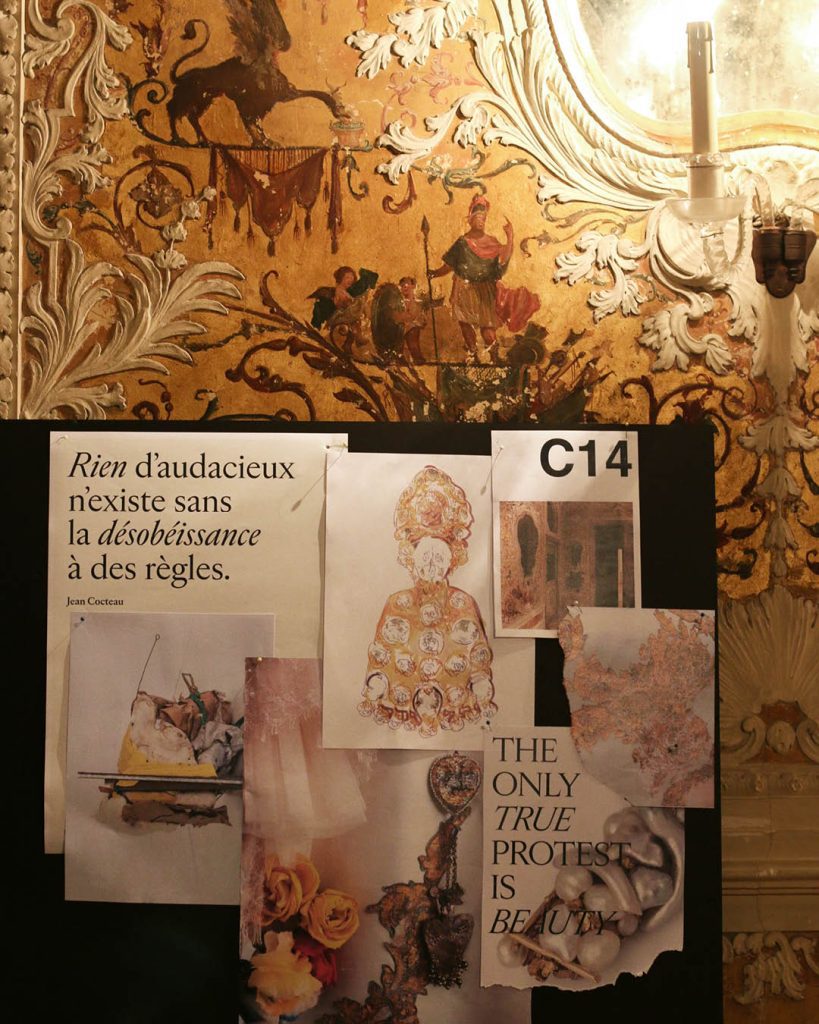
The title itself, drawn from a line by Phil Ochs—“In such ugly times, the only true protest is beauty”—sets the tone. Beauty, in this context, is not an escape from reality, but a form of confrontation.
Curated by Dries Van Noten and Geert Bruloot, the presentation moves away from traditional exhibition formats. Rather than separating disciplines or creating hierarchies—fashion here, art there, established names in one room and emerging artists in another—it brings everything into dialogue.
The result is a deliberately instinctive path, where archival pieces coexist with experimental works and new voices. This approach gives the exhibition a sense of personality that feels rare: it’s not about who made the work or how established they are, but about what each piece expresses.
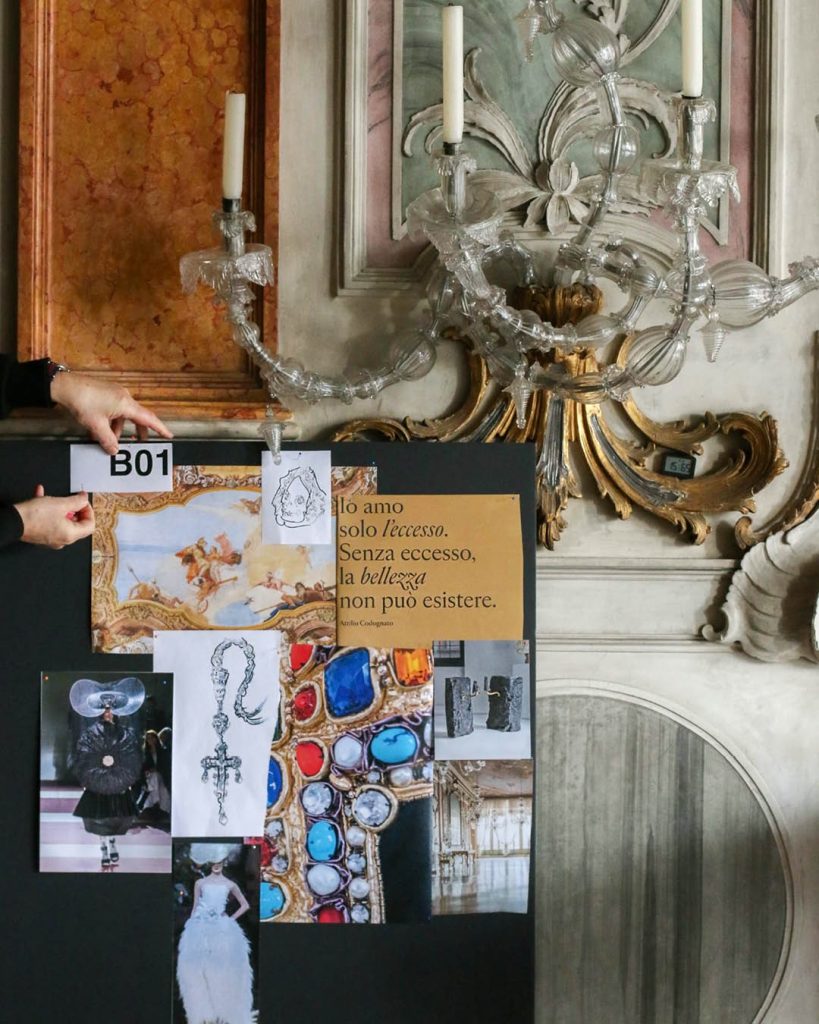
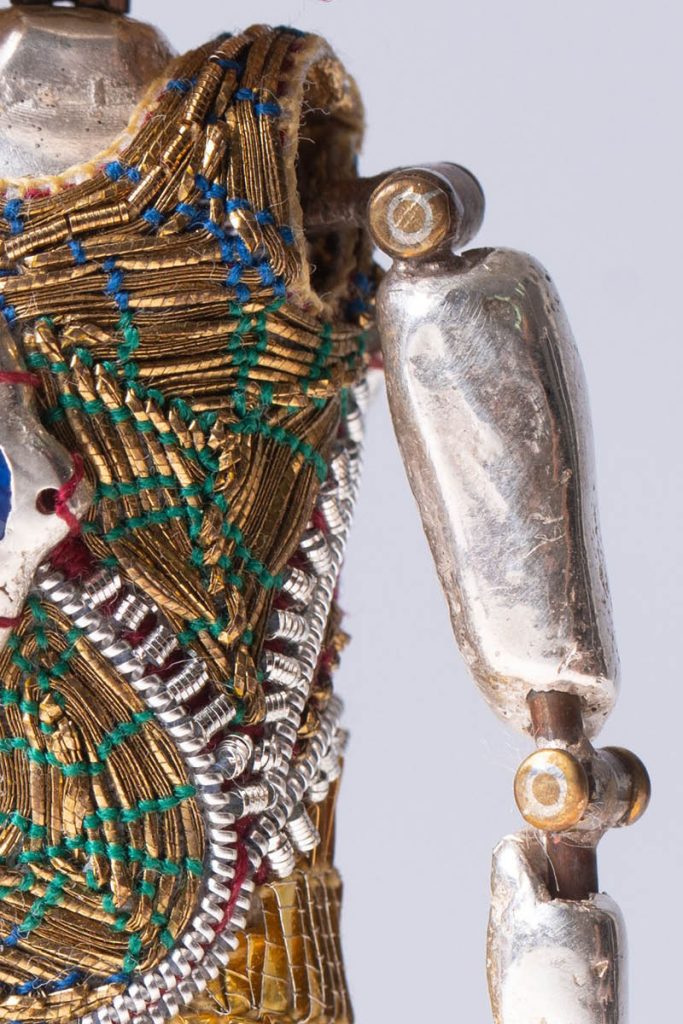
As the curators suggest, what matters for them is beauty not as an answer but as a question.
In this sense, it carries ambiguity and even contradictions, at times unsettling rather than reassuring. The real aim is pushing viewers to reconsider beauty not as a fixed definition. It all lies in recognizing that what they have always perceived as complete may in fact extend far beyond.
Fashion plays a central role in the exhibition.
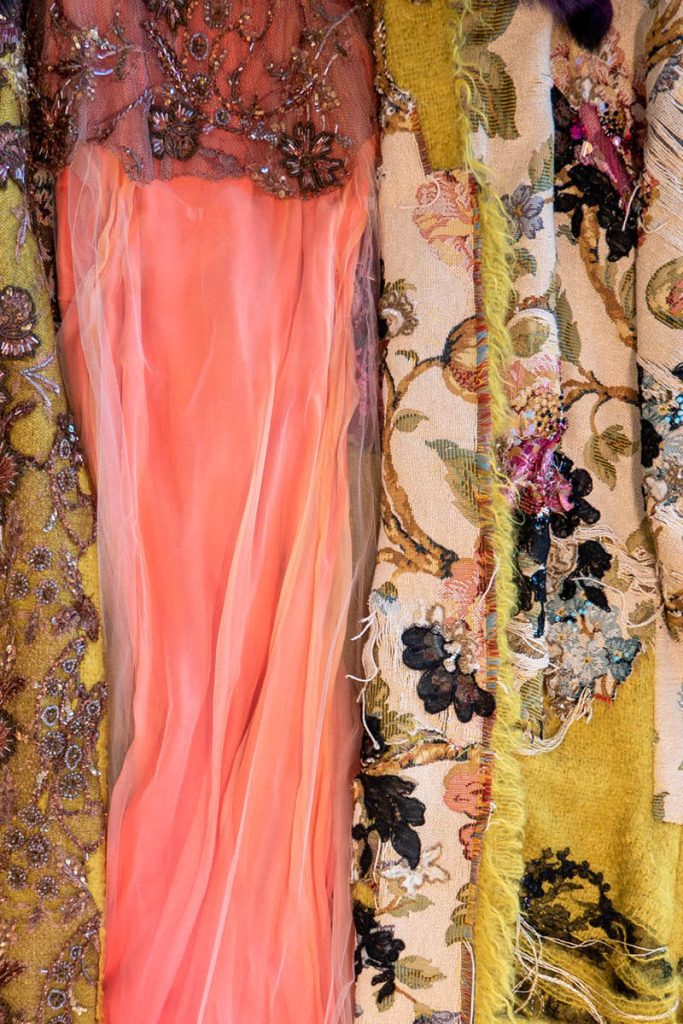
It’s a common thread that runs throughout the presentation, from the first to the last room. The pieces on display trace Van Noten’s creative evolution, revealing what’s behind the surface of aesthetic conventions. There is something deeply authentic in this process, which allows fashion to connect naturally with the other works.
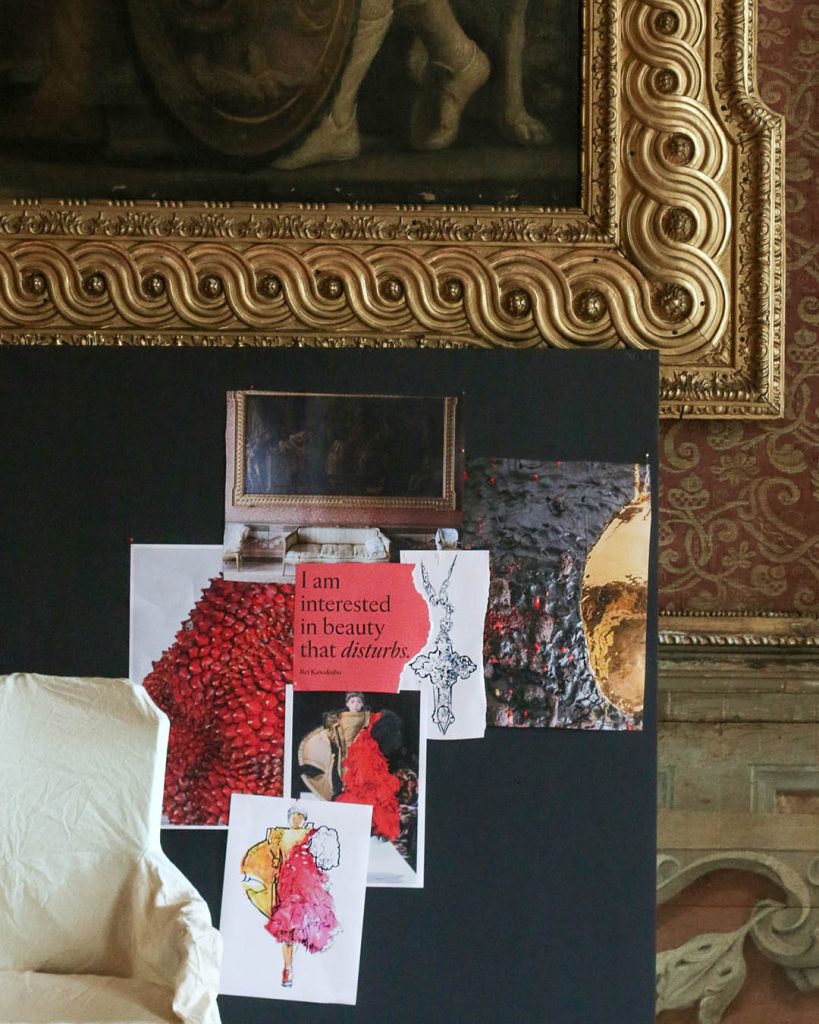
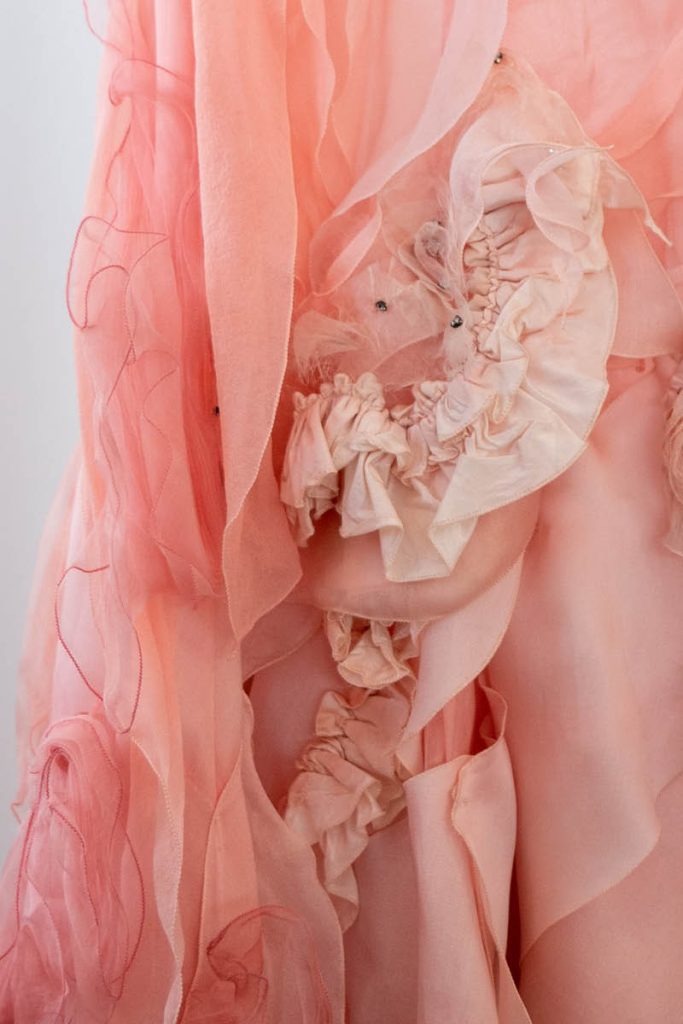
Yet the actual through line of the presentation is craftsmanship: the act of making as a form of expression.
Here, creation does not need to be perfect, harmonious or immediately understandable. It can be raw, complex and, for this reason, meaningful.
Provocation then becomes essential. Whenever the composition risks becoming too easy or too resolved, something interrupts it. Could be an unexpected form or a dissonant detail. In this way, beauty becomes active, building tension, keeping the viewer alert and challenging the public.
What emerges from Fondazione Dries Van Noten’s exhibition is that, ultimately, the question is not how to preserve the past by isolating it, but how to allow new perspectives to emerge alongside it. If beauty is to remain alive, it must continue to evolve. In doing so, it creates space for new talents while continuing honoring those who came before.
La bellezza non solo come estetica, ma come protesta.
Dal 25 aprile al 4 ottobre, Palazzo Pisani Moretta ospiterà la nuova presentazione della Fondazione Dries Van Noten che promette di essere tutt’altro che convenzionale. Se vi capita di essere a Venezia, è una di quelle cose da non perdere!
A prima vista potrebbe sembrare familiare: una mostra dedicata alla bellezza. Ma qui la bellezza non è trattata come qualcosa di semplicemente decorativo. Diventa invece uno strumento, capace di provocare riflessioni e aprire nuovi spazi di pensiero.
Il titolo stesso, preso da una frase di Phil Ochs—“In such ugly times, the only true protest is beauty”—dà subito il tono. La bellezza, in questo contesto, non è una fuga dalla realtà, ma un modo per confrontarsi con essa.
Curata da Dries Van Noten e Geert Bruloot, la presentazione si allontana dai format espositivi tradizionali. Invece di separare discipline o creare gerarchie—la moda da una parte, l’arte dall’altra, i grandi nomi in una stanza e gli emergenti in un’altra—unisce tutto in un dialogo.
Il risultato è un percorso volutamente istintivo, dove pezzi d’archivio convivono con lavori sperimentali e nuove voci. Un approccio che dà alla mostra una personalità rara: non conta chi ha realizzato l’opera o quanto sia affermato, ma ciò che ogni pezzo riesce ad esprimere.
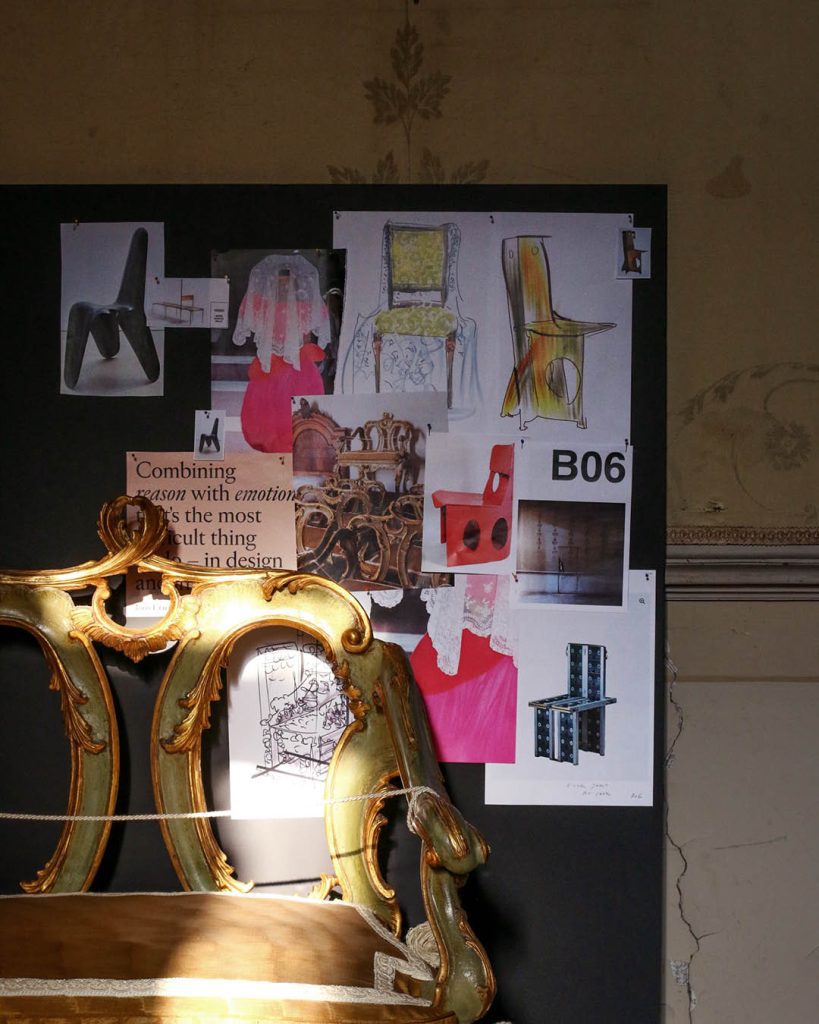
Come suggeriscono i curatori, ciò che conta è la bellezza non come risposta, ma come domanda.
In questo senso, porta con sé ambiguità e contraddizioni, risultando a tratti più destabilizzante che rassicurante. L’obiettivo è spingere il pubblico a rimettere in discussione l’idea stessa di bellezza, non più come qualcosa di fisso. Tutto sta nel riconoscere che ciò che abbiamo sempre percepito come completo, in realtà può estendersi molto oltre.
La moda ha un ruolo centrale all’interno della mostra.
È un filo conduttore che attraversa tutto il percorso, dalla prima all’ultima sala. I capi esposti raccontano l’evoluzione creativa di Van Noten, mostrando cosa si nasconde dietro la superficie delle convenzioni estetiche. C’è qualcosa di profondamente autentico in questo processo, che permette alla moda di dialogare in modo naturale con le altre opere.
Ma il vero filo conduttore della presentazione è il fare: la capacità di creare come forma di espressione.
Qui la creazione non deve essere perfetta, armoniosa o immediatamente comprensibile. Può essere grezza, complessa e proprio per questo significativa. La provocazione diventa quindi essenziale. Quando la composizione rischia di diventare troppo semplice o prevedibile, qualcosa interviene per interromperla. Può essere una forma inattesa o un dettaglio dissonante, per esempio. In questo modo, la bellezza diventa attiva, costruisce tensione, mantiene lo spettatore vigile e lo mette in discussione.
Ciò che emerge dall’esposizione della Fondazione Dries Van Noten è che la vera domanda non è come preservare il passato isolandolo, ma come permettere a nuove prospettive di emergere accanto ad esso. Se la bellezza vuole restare viva, deve continuare ad evolversi. E per farlo, deve lasciare spazio ai nuovi talenti senza smettere di valorizzare quelli già esistenti.